10 Running Training Tips You Can Sync to Your Watch

From Messy Notes to Perfectly Paced Miles
You have a training plan. Maybe it’s scribbled in a notebook, buried in a text from your coach, or sitting in your head as “tempo Tuesday, long run Saturday, something hard on Thursday.” The goal is simple. Get faster, build endurance, and stay healthy long enough to string good weeks together.
The problem usually isn’t knowing what workout to do. The problem is execution. A note like “5 x 3 min hard with 2 min easy” looks clear until you’re standing outside with a GPS watch, poking through menus, trying to build the session step by step. That friction matters. It delays the workout, creates mistakes, and makes it more likely you’ll wing the pacing instead of hitting the session as intended.
That’s where structured training helps. When your workout is already on your watch, you stop guessing. You run the plan that was written, not the watered-down version you remember halfway through a warm-up.
This guide gives you practical running training tips you can use right away. It also shows how to take plain-language workout notes and turn them into device-ready sessions with TextFit, so the gap between plan and execution disappears. If you’ve ever had a good training idea die in your notes app, this is the fix.
Table of Contents
- 1. Interval Training with Structured Workouts
- 2. Long Slow Distance Runs
- 3. Tempo Runs Threshold Training
- 4. Fartlek Training Speed Play
- 5. Progressive Running Workouts Build-Up Runs
- 6. Recovery Runs and Active Recovery
- 7. Hill Repeats and Hill Training
- 8. Cross-Training and Complementary Workouts
- 9. Periodization and Structured Training Blocks
- 10. Pace and Power Monitoring with Device Integration
- 10-Point Comparison of Running Training Methods
- Stop Building Workouts. Start Running Them.
1. Interval Training with Structured Workouts
Intervals are where sloppy execution shows up fastest. If the hard reps drift too fast, the recoveries get too short, or you lose count, the session stops training the system you intended and turns into a survival test.
That’s why I prefer interval days to be fully structured before the run starts. A workout like 5 x 3 minutes hard with 2 minutes easy, 8 x 400 meters with jog recovery, or 2 x 10 minutes at threshold works best when your watch tells you exactly when each step begins and ends.
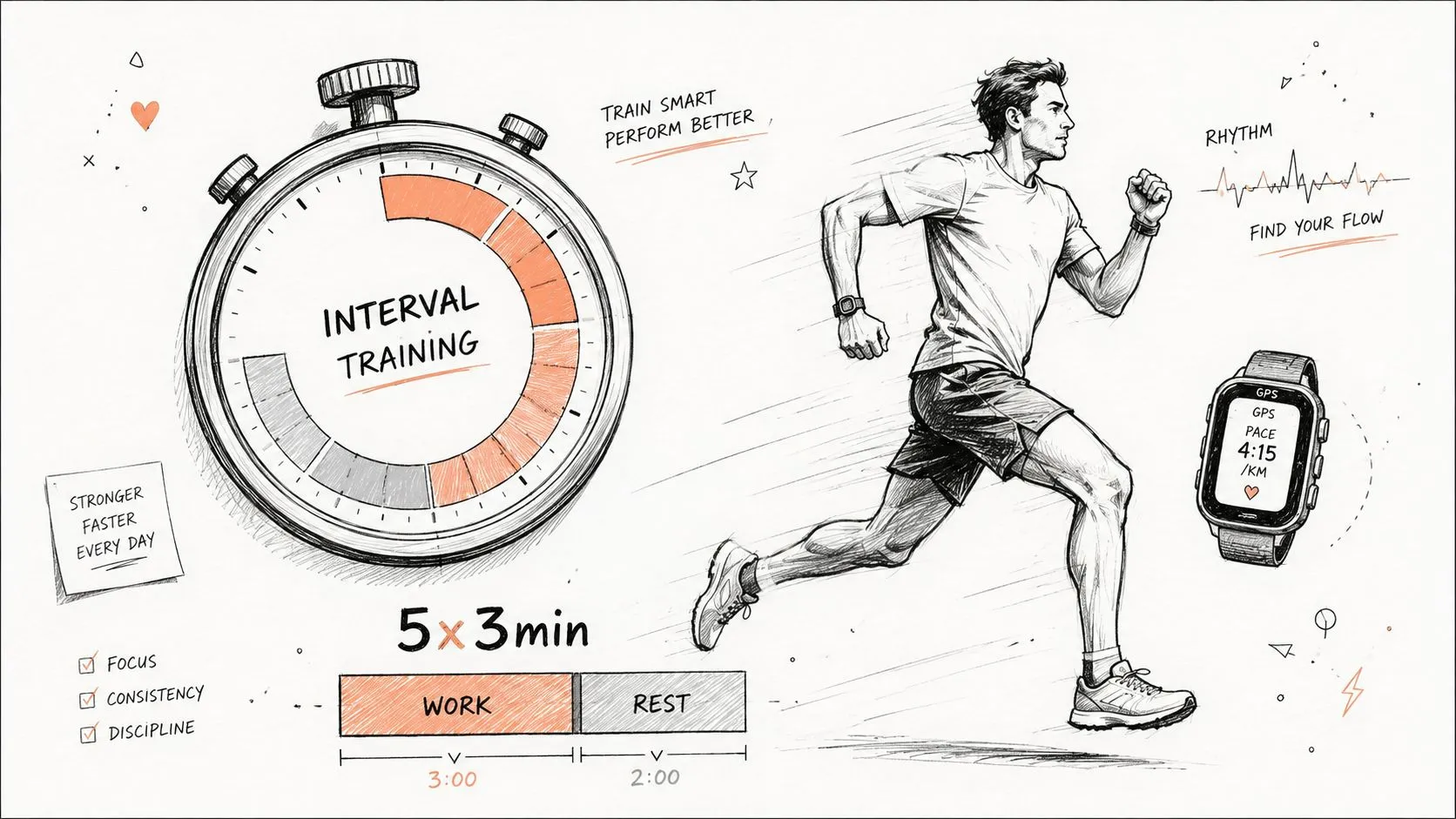
Why intervals work best when they’re pre-built
The biggest win is consistency. When every rep starts on cue and every recovery is controlled, you can compare one session to the next without guessing whether the workout changed.
TextFit is useful here because you type the workout the way runners describe it. Write “5 x 3 min hard with 2 min easy” and it becomes a structured session you can send to your watch, no drag-and-drop builder required. If you want a cleaner workflow, look at TextFit’s approach to a structured workout plan.
Practical rule: Start with one interval session per week and keep the rest of the week easy enough that you can absorb it.
How to set up interval days
A few habits make interval training better:
- Build the workout the day before: Don’t wait until you’re standing at the trailhead.
- Use clear effort language: “5K pace,” “threshold,” or “hard but controlled” is better than vague notes.
- Turn on lap alerts: Your watch should cue the rep changes so you’re not staring at the screen.
If you’re newer to speed work, keep the menu small. One interval workout done well every week beats three complicated sessions done half-right.
2. Long Slow Distance Runs
You head out for a planned easy 90 minutes, glance at your watch halfway through, and realize the pace has drifted close to marathon effort. That is the long-run mistake I see most often. The session still feels productive, but it stops doing the specific job easy volume is supposed to do.
Long slow distance runs work because they build aerobic capacity without burying you. Stephen Seiler’s work on endurance training intensity distribution supports keeping most training at low intensity, with a smaller share reserved for harder work, as outlined in this overview of the 80/20 approach to endurance training. For runners, that matters because the long run is often the biggest opportunity each week to add useful volume without creating recovery debt.

How easy running builds your season
A good long run improves endurance, durability, and pacing discipline. It also teaches a skill many runners underestimate. Holding back early so you can finish steady.
The exact format depends on the goal. A newer half marathon runner might do 75 to 90 minutes at conversational effort on flat roads. A marathoner may build toward 2 hours or more, often with fueling practice. A trail runner may run by time and effort instead of pace because terrain changes too much to make split chasing useful.
The trade-off is straightforward. Run too easy and you may miss chances to practice fueling, terrain, or late-run rhythm. Run too hard and you turn an aerobic session into a recovery problem that hurts the next few days.
How to keep long runs honest
Simple structure helps. I prefer a long run that has just enough guidance to prevent drift. Something like “15 min very easy, 60 min easy, 15 min easy steady” works better than heading out with no plan and negotiating the pace mile by mile.
TextFit solves the annoying part between knowing the session and following it. Type the workout in plain language, review the structured version, and send it to your watch. That matters on long-run days because the watch can cue effort changes, remind you where the easy segment ends, and stop the common slide from easy aerobic running into steady-state grinding.
A few practical choices make these runs more useful:
- Set an effort cap before you start: Use talk test, heart rate, or a conservative pace range.
- Fuel the longer ones on purpose: If the run goes long enough to matter for race prep, practice intake instead of guessing.
- Choose terrain that matches the goal: Flat routes help control effort. Hills add strength but make pace less useful.
- Treat the watch as a guardrail: Alerts should keep you aerobic, not push you into chasing numbers.
If you finish feeling like you could have kept going for another 15 to 20 minutes, you were probably in the right zone. That is how long runs support the rest of the week instead of taking it over.
3. Tempo Runs Threshold Training
Tempo runs sit in the uncomfortable middle. They aren’t easy enough to relax through, and they aren’t hard enough to attack recklessly. That’s exactly why they matter.
The term gets used loosely, but the useful version is controlled threshold work. A classic example is 20 minutes steady after a warm-up, or two longer blocks with short recovery. These sessions teach you to hold pressure without flooding the run with too much intensity.
The mistake most runners make with tempo
Most runners run tempo too hard. They turn a sustained threshold effort into a short race and wonder why the back half falls apart.
A better model is to keep the session just below the point where form starts to fray. Research on sub-threshold interval training describes work between lactate threshold 1 and 2 as a way to accumulate high-end aerobic volume while staying below the second lactate threshold, which helps runners avoid overtraining during quality work, as covered in this review on distance-running training advances.
Tempo should feel controlled enough that you could keep going a little longer, not like you’re hanging on from the first third.
How to write a watch-ready tempo session
Tempo is ideal for TextFit because the structure is usually simple but timing matters. You can write “10 min easy, 20 min tempo, 10 min easy” or “2 x 10 min threshold with 3 min jog” and send it to your watch as a guided session.
Use these filters before you sync it:
- Choose a flat route: Hills make honest threshold pacing harder.
- Preview the steps: Make sure the work segment matches your current fitness.
- Keep the cool-down in the file: Otherwise runners stop the workout early and skip it.
Tempo days reward discipline more than hype. If you finish feeling like you nailed the assignment instead of survived it, that’s usually a good sign.
4. Fartlek Training Speed Play
Fartlek is useful when rigid splits would get in the way. It gives you speed changes, aerobic pressure, and some freedom inside the session.
That freedom doesn’t mean randomness. Good fartlek training still has shape. “Run 45 minutes with several hard surges” is too vague for many runners. “Alternate 90 seconds hard with 2 minutes easy through the middle of the run” gives enough structure to make the session repeatable.
Controlled chaos beats random sprinting
The best fartlek sessions feel playful but not careless. You surge to a landmark, back off, settle in, and go again. On trails or rolling roads, that can be more practical than trying to lock onto exact pace targets.
TextFit helps by turning loose descriptions into repeatable formats. If your coach writes, “mix 2 to 3 minute hard efforts with easy recovery through the middle 30 minutes,” you can convert that into a session your watch can follow without draining the spontaneity out of it.
Good fartlek sessions to try
A few examples work especially well:
- Classic alternating effort: 90 seconds hard, 2 minutes easy, repeated through the main set.
- Landmark fartlek: Surge to the next lamp post or corner, then settle back to easy running.
- Terrain fartlek: Run steady on flats and push the hills by feel.
This is a good place to run by effort rather than obsess over pace. If you need the session to be more controlled, put broad targets into the watch. If you need it to stay loose, use the watch for timing only.
5. Progressive Running Workouts Build-Up Runs
A progression run teaches something many runners lack on race day. Patience early, control in the middle, and the ability to finish strong without panic.
That makes it one of the most practical running training tips for anyone who tends to blast the first part of a workout and fade late. The structure can be simple. Start easy, build to moderate, then finish around threshold or race effort.
Why progression runs teach race control
These runs expose pacing habits quickly. If the opening segment is too fast, the final segment becomes survival. If the build is gradual, the workout feels smooth and confidence-building.
A strong example is 15 minutes easy, 10 minutes moderate, 10 minutes threshold, 5 minutes fast but controlled. Another is 20 minutes easy progressing into 20 minutes of steady tempo. TextFit handles these staged efforts well because you can type the session exactly as you’d say it and review each step before syncing.
How to avoid overcooking the final segment
Two things matter. Start easier than you think you need to, and make each jump small enough that the last segment is hard because of accumulation, not because you launched into it.
Try this simple framework:
- First segment: Relaxed enough that breathing is calm and form feels automatic.
- Middle segment: More engaged, but still under control.
- Final segment: Strong and focused, with no sprinting.
Progression runs work especially well on measured routes, tracks, or flat loops where you won’t confuse effort changes with terrain changes.
6. Recovery Runs and Active Recovery
Recovery runs are easy to dismiss because they don’t feel heroic. That’s also why they work. Their job isn’t to impress you. Their job is to help you show up better for the next quality day.
If you’re always tempted to “make the easy day count,” you’ll eventually make the hard day mediocre too. Recovery running protects the quality of the whole week.
Easy means easy
For beginners, a simple standard works well. Train at least three days per week and keep the pace conversational through the first three months before adding intensity, as recommended in these beginner-friendly training tips. That same talk-test mindset is useful even for experienced runners on recovery days.
A recovery run can be a short easy jog after a hard session the day before, or a gentle outing between two tougher workouts. The common mistake is letting ego pull the pace upward because the legs feel better after ten minutes.
If you can’t speak in full sentences, it’s not a recovery run anymore.
When a recovery run works better than total rest
Sometimes complete rest is the right call. But if you’re only carrying normal training fatigue, an easy run can loosen things up and help you settle back into rhythm.
TextFit is helpful here because a note like “easy 30 min recovery” becomes a session that reminds you what the day is for. That matters more than people think. A guided easy day often saves runners from turning recovery into another moderate effort by accident.
7. Hill Repeats and Hill Training
You feel strong ten minutes into a workout, hit the first hill too hard, then spend the rest of the session surviving instead of training. Hill work rewards control more than bravado.
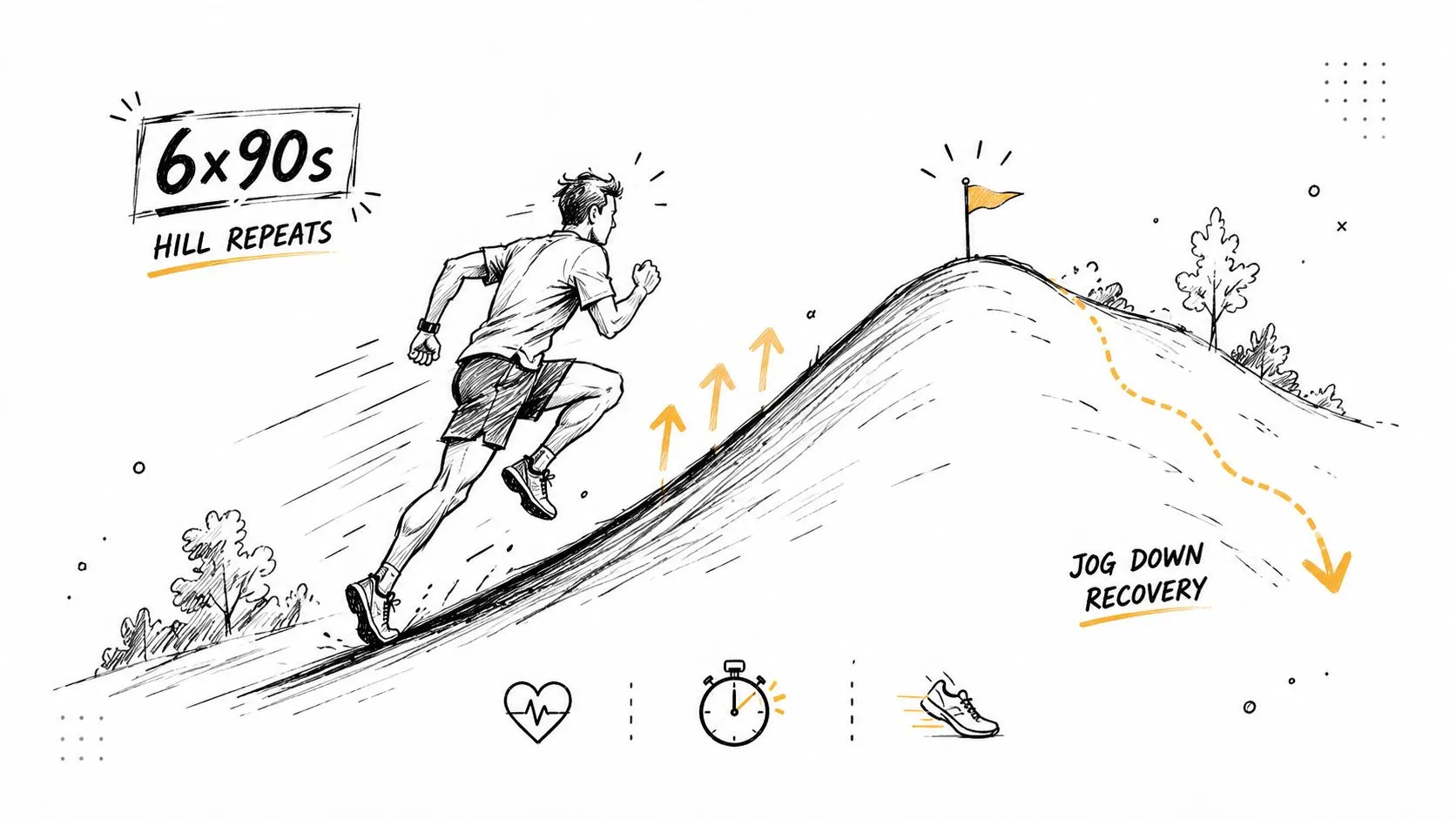
A good hill session builds strength, improves posture under load, and cleans up mechanics without forcing you to stare at pace numbers that do not make much sense on an incline. If a runner overstrides, a hill exposes it fast. If posture collapses, the effort spikes immediately.
What hill training does
Short hill repeats usually target power and form. Longer climbs work more like threshold training, especially if the grade is steady and the effort stays controlled. Both can help, but they are not interchangeable.
For newer runners, the safest entry point is short repeats on a moderate hill. Start with something like 6 to 8 efforts of 30 to 60 seconds uphill at a hard but repeatable effort, then jog or walk back down until breathing settles. Experienced runners can use longer reps, such as 4 to 6 x 2 minutes uphill, if they already tolerate faster work well.
The cue I give most often is simple. Keep the stride short and the cadence quick. Drive the arms back, keep the chest tall, and lean slightly from the ankles rather than bending at the waist.
How to set up a hill session without overcomplicating it
Hill workouts often fall apart in the setup, not the running. The written plan is easy enough. The watch programming is what slows people down.
TextFit solves that friction. Type a plain-language session like “8 x 45 sec uphill hard, easy jog back recovery” or “5 x 2 min uphill at strong effort, 2 min easy down” and turn it into a structured workout you can send to your device. That matters on hills because you do not want to count reps, guess recoveries, or fumble with buttons while breathing hard on a slope.
A few practical rules keep the workout useful:
- Pick the right hill: Moderate grade works better than a steep wall. You want repeatable effort and decent mechanics.
- Run by effort, not pace: Uphill pace will look slow. That is normal.
- Recover fully enough to run well again: If every rep gets sloppy, the recovery is too short or the first rep was too aggressive.
- Stay relaxed on the downhill: Use the jog down to reset, not to hammer eccentric load into tired legs.
If form falls apart by rep three, cut the session short. Bad hill reps teach bad mechanics.
For a visual example of hill running form and session flow, this short demo is useful.
8. Cross-Training and Complementary Workouts
Running alone doesn’t solve every weakness a runner has. Sometimes the limiter isn’t aerobic fitness. It’s durability, stiffness, imbalance, or too much repetitive loading from doing the same thing every day.
That’s where cross-training and strength work earn their place. Easy cycling, swimming, mobility work, and smart lifting can support the running week instead of competing with it.
Strength work runners usually skip
A big gap in a lot of running advice is specific guidance on heavy single-leg strength work. Evidence-backed coaching discussions point to running as a single-leg sport and recommend 1 to 2 strength sessions weekly, with heavy single-leg work in the 6 to 8 rep range, as explained in this strength training talk for runners.
That doesn’t mean turning yourself into a powerlifter. It means picking movements that improve force production and control without wrecking your run sessions.
Strong runners do more than log miles well. They handle force well.
How to fit cross-training into a real week
Think of complementary work as support, not decoration. A good week might pair a tempo run with lower-body strength, place an easy bike ride after an easy run, or use mobility after a hill session.
A simple approach looks like this:
- After hard run days: Add short mobility work if you recover well from doubles.
- On easy days: Place light cross-training that doesn’t create lingering fatigue.
- On strength days: Keep the lifts focused and avoid adding junk volume.
TextFit handles the run sessions, but a mixed week still gets easier when your key runs are clear and device-ready. You can slot the non-running work around them instead of cramming everything together.
9. Periodization and Structured Training Blocks
Runners get in trouble when every week looks like a random collection of hard sessions. You need phases. Not because periodization sounds advanced, but because fitness responds better when training has a clear emphasis.
A base phase leans on easy running and general support work. A build phase introduces more race-relevant intensity. A peak phase gets specific. Then you back off enough to absorb the work before race day.
Train in phases, not in a blur
Personalization matters here. Machine-learning research on recreational marathon training found that experience level was the strongest predictor of training response, with significant correlations to both pyramidal and polarized training effectiveness, and that consumer-grade monitoring technology can support individualized prescription, as reported in this study on personalized training models.
That lines up with what coaches see in practice. The right block for a newer runner often looks simpler and steadier than the right block for someone with years of training history.
TextFit trims the admin of a training block because each key session is written once and stays device-ready. For laying out the wider week, see this guide to a workout planner calendar.
What to do when life interrupts the plan
The missed-week problem deserves more attention than it gets. Guidance is often vague. You miss several days, then someone tells you to “just ease back in” without telling you what to trim.
There is a real gap here. Practical coaching commentary notes that many resources don’t clearly explain how to adjust threshold load after missing 3 or more consecutive days, even though threshold intervals remain critical in endurance training, as discussed in this guide to missed training adjustments.
When that happens, I’d simplify instead of forcing the original week back into place. Keep one key workout, reduce total quality volume, and protect the long run or the easiest aerobic session that matters most for your current phase.
10. Pace and Power Monitoring with Device Integration
Your watch shouldn’t run the workout for you, but it should keep you honest. That’s the sweet spot.
Good device use turns pace, heart rate, cadence, and step timing into feedback instead of noise. Bad device use turns every run into a fight with the screen.
Use your watch as a guardrail
The best use case is simple. You write the session in plain language, TextFit converts it into a structured workout, and your Garmin, Wahoo, or Apple Watch walks you through the steps.
That’s especially helpful for workouts with changing targets. A progression run, a threshold session, or intervals with specific recoveries are all easier to execute when the device prompts each segment instead of asking you to remember everything mid-run. If you need target ranges for effort-based sessions, TextFit’s heart rate zones calculator is a practical starting point.
What to review after the workout
Most runners only look at average pace. That misses the point. Review whether you stayed inside the intended effort band, whether the recoveries were controlled, and whether the later reps matched the early ones well enough to show pacing discipline.
A few simple habits help:
- Sync ahead of time: Don’t troubleshoot your watch at the curb.
- Charge before hard sessions: Battery anxiety changes behavior.
- Check compliance, not only outcomes: A perfectly executed moderate workout is often better than a messy heroic one.
The less friction there is between the written workout and the device on your wrist, the more likely you are to train as planned instead of improvising.
10-Point Comparison of Running Training Methods
| Workout | 🔄 Implementation Complexity | ⚡ Resource Requirements | 📊 Expected Outcomes | 💡 Ideal Use Cases | ⭐ Key Advantages |
|---|---|---|---|---|---|
| Interval Training with Structured Workouts | Moderate–High; requires exact pacing and structure | GPS/watch, pacing targets, recovery planning | Rapid VO2, speed, lactate-threshold gains | Race pace sharpening, time-efficient sessions | ⭐ High effectiveness; precise device-guided execution |
| Long Slow Distance (LSD) Runs | Low; simple planning but long duration | Time commitment (90–240+ min), low-tech | Strong aerobic base, fat metabolism, mental endurance | Base building, ultra/long-distance prep | ⭐ Durable aerobic gains with low injury risk |
| Tempo Runs (Threshold Training) | Moderate; needs accurate pace calc and warm/cool | Pace data or recent race times, recovery day | Improved lactate threshold and sustainable race pace | Half/marathon race prep, threshold development | ⭐ High training value in moderate time |
| Fartlek Training (Speed Play) | Low–Moderate; flexible, less rigid structure | Minimal gear, varied terrain helpful | Speed, adaptability, reduced mental fatigue | Variety days, trail speed, playful workouts | ⭐ Engaging, adaptable way to build speed |
| Progressive Running Workouts (Build-Up Runs) | Moderate; multi-stage pacing control | Pace targets, measured route or device guidance | Better finishing speed, neuromuscular adaptation | Race-simulation, pace-awareness training | ⭐ Trains speed under fatigue; race-specific benefit |
| Recovery Runs and Active Recovery | Very Low; minimal planning, strict effort control | Short time, low intensity, watch optional | Accelerated recovery, maintained consistency | 24–48h post-hard sessions, easy days | ⭐ Protects adaptation with low injury risk |
| Hill Repeats and Hill Training | Moderate; needs hill access and repeat structure | Suitable hill (grade/length), safe route | Leg strength, power, improved running economy | Strength phase, power development, late-base work | ⭐ Builds strength with lower joint impact |
| Cross-Training and Complementary Workouts | Moderate; scheduling and modality balance | Gyms, pool, bike, equipment depending on sport | Reduced overuse, balanced fitness, injury prevention | Recovery days, multisport athletes, strength work | ⭐ Broad fitness gains and injury-risk reduction |
| Periodization and Structured Training Blocks | High; multi-week planning and expertise | Long-term commitment (12–16+ weeks), coaching input | Peak performance timed to goals, systematic gains | Season planning, targeted race preparation | ⭐ Maximizes performance via planned progression |
| Pace and Power Monitoring with Device Integration | Moderate; setup and metric learning curve | Modern watch/head unit, sensors, charging | Objective pacing, compliance tracking, analytics | Data-driven coaches/athletes, device-guided sessions | ⭐ Real-time feedback + post-run analysis; reduces setup friction |
Stop Building Workouts. Start Running Them.
Most runners don’t need more training theory. They need cleaner execution.
That’s the common thread running through all of these running training tips. Intervals work when the reps are controlled. Long runs work when you keep them easy. Tempo runs work when you resist racing them. Hill sessions work when you focus on rhythm and form instead of forcing pace. Recovery runs work when you let them stay recovery runs. The quality of the plan matters, but the quality of execution decides whether the plan does anything useful.
This is where a lot of training breaks down. The workout exists in one format, but the run happens in another. A coach writes “2 x 10 min threshold.” An athlete remembers it as “something around tempo.” The watch gets nothing structured, the recoveries get guessed, and the session turns into a rough approximation. That might feel close enough, but close enough adds up over weeks. Small errors in setup become inconsistent training.
TextFit solves a practical problem almost every runner and coach has felt. Take the workout as it’s naturally written, turn it into structured intervals, review the result, make quick edits, and sync it to your watch without touching a clunky builder. That matters on interval days, but it also matters on ordinary days when you want the watch to guide the plan and reduce mental load.
The best part is how easy it is to start. You don’t need to rebuild your whole season. Pick one workout from this article. Try “5 x 3 min hard with 2 min easy,” “10 min easy + 20 min tempo + 10 min easy,” or “6 x 90 sec uphill hard, jog down easy.” Put it into TextFit the way you’d text it to a coach or training partner. Preview it. Sync it. Then go run it without second-guessing the structure halfway through.
That’s how better training usually happens. Not through dramatic overhauls, but through removing friction from the habits that matter most.
If you’re a coach, that means less time translating notes into device steps for every athlete. If you’re self-coached, it means your plan becomes executable instead of aspirational. And if you’ve got a watch full of half-built workouts and old templates, it means you can finally stop treating setup as part of the training load.
Structured training only helps if you run the structure. TextFit makes that part easier, and it’s free to start.
Pick one workout from this list and type it into TextFit the way you’d text it, in any language: “5 x 3 min hard with 2 min easy.” AI turns it into a structured session you review and tweak, then it syncs to Garmin or Wahoo through intervals.icu, or schedules straight onto Apple Watch. Free to start, no sign-up, no email required.