8 Interval Workout Examples for Runners and Cyclists
You’ve got a coach’s note in your inbox, a messy text thread, or a scribbled plan on paper. The workout is clear enough in your head, but turning it into a structured session on a Garmin or Wahoo still takes too long. That gap between “I know what to do” and “my device is ready” is where most interval workouts get delayed, watered down, or skipped.
The fix is simpler than most people make it. Write the workout you want in plain language, turn it into a structured session with TextFit, and sync it before you lace up or clip in. That gives you interval workout examples you can execute, not only admire in a notes app.
Good intervals aren’t random suffering. They’re built around work duration, recovery, and repetition patterns, the kind of structure training experts use in everything from classic 400-meter repeats with active rest to longer work blocks and mixed interval sessions as described by Runner’s World. Once you know the pattern, you can turn any coach note into something your device can cue in real time. If you’ve ever stared at a blank workout builder five minutes before training, this is the shortcut you wanted.
Table of Contents
- 1. High-Intensity Interval Training
- 2. Sweet Spot Intervals
- 3. Fartlek Training
- 4. Tempo / Threshold Intervals
- 5. VO2 Max Intervals
- 6. Pyramid / Ladder Intervals
- 7. Recovery / Active Recovery Intervals
- 8. Repeats / Anaerobic Capacity Intervals
- 8-Point Interval Workout Comparison
- Your Training, Simplified
1. High-Intensity Interval Training
A hard HIIT session should feel controlled from the first rep, even when the effort is high. Start with a clear work interval, keep the recoveries honest, and stop the session before pace or form falls apart. That is what makes the workout useful in practical training, where the goal is to repeat quality efforts with enough consistency to drive adaptation, not to suffer.
A practical template is short bursts with short recoveries. Common setups include 30 seconds on / 30 seconds off repeated in sets, or 60 seconds on / 30 seconds off for a slightly longer push. For runners, a classic session is 400-meter repeats with 60 seconds of active rest after a 10- to 15-minute warmup described by Runner’s World. If you want to turn that kind of plan into something your watch can cue step by step, use a cycling FTP calculator to anchor the effort level, then let TextFit turn the plain-language prompt into a device-ready workout.
Prompt and device-ready conversion
A clean prompt might read: “8 rounds of 30 seconds hard, 30 seconds easy, after a 10-minute warmup.” Put that into TextFit, and it becomes a structured workout with work, rest, and repeat logic instead of a flat note you still have to interpret on the fly.
HIIT only works when the recoveries are real enough to let you hit the next effort with quality. If the hard segments turn into sloppy lunging or half-speed efforts, the session stops being HIIT and becomes fatigue practice. The structured session keeps you honest, which is especially useful when you are training by feel but still want your Garmin or Wahoo to guide the timing.
Practical rule: Use HIIT when you want a sharp session that fits into a limited window, and keep the structure tight enough that each rep starts strong and finishes with control.
2. Sweet Spot Intervals
Sweet spot sits in the useful middle ground. The work is hard enough to drive adaptation, but it usually leaves you able to train again without the wrecked feeling that follows an all-out threshold day. That trade-off is why cyclists and runners keep coming back to it.
For cycling, sweet spot usually means sustained efforts just under threshold. A practical example is 3 x 8 minutes at 90% FTP with 3-minute recoveries, a structure that appears often in real training plans and fits comfortably inside threshold-oriented programming as outlined by Scientific Triathlon. The payoff is straightforward: you spend enough time near difficult aerobic work to build endurance and muscular durability, while avoiding the full cost of repeated maximal efforts. If you are setting power targets for a bike session, a cycling FTP calculator helps anchor the intensity before you convert the plan into a device-ready workout.
How to write the prompt cleanly
A coach might text, “Three 8-minute hard efforts with 3-minute easy spin between.” That is enough for TextFit to turn the note into a structured workout without anyone rebuilding the session by hand. If you want more control, add the target, such as “at sweet spot” or “at 90% FTP,” and keep the step order simple so the parser preserves it exactly.
The best sweet spot sessions feel controlled early and demanding late. If you are gasping in the first half, the target is too high or the warmup was too short. If you finish and feel ready to repeat the workout without much hesitation, the effort probably drifted too low and never settled into the productive middle ground.
A coach’s prompt can stay plain language and still be precise. TextFit is useful here because a line like “3 x 8 minutes at sweet spot, 3 minutes easy between” can become a structured workout your Garmin or Wahoo cues step by step, which removes the guesswork once the workout starts. For riders training indoors, that means fewer pauses to check a note and more time holding the right power. For runners, the same idea works with pace or effort cues as long as the workout is written clearly.
Sweet spot also rewards discipline. If the first interval feels too comfortable, many athletes push too hard in the second half and turn the whole session into a threshold test. Keep the effort steady, recover appropriately between reps, and leave enough in reserve to repeat the session in the next training block.
Choose this format when you want productive aerobic work without the recovery cost of race-level intensity. The session should feel useful, not heroic.
3. Fartlek Training
Fartlek is the loosest workout on this list, and that is exactly its value. Instead of fixed reps on a track, you mix surges and easy running by feel — push to the next lamppost, float until the legs settle, then go again. The Swedish name means “speed play,” and the format builds pace awareness and running economy while keeping the session mentally fresh, especially on trails or in groups.
A practical session stays in the 30 to 60 minute range: warm up, then alternate harder surges of 30 seconds to 3 minutes with equal or longer stretches of easy running, guided by terrain and feel rather than the watch. If you want the full background on the format and its benefits, this guide to fartlek training breaks down where it came from and how to use it.
Keep the freedom, add light structure
Fartlek does not need to stay vague to stay useful. A prompt like “45 minutes easy running with 8 surges of 1 minute, easy between” keeps the playful shape but gives TextFit enough structure to build a session your watch can cue. That middle ground works well for athletes who like the freedom but still want a record of what the workout was supposed to be.
The main mistake is turning every surge into a sprint. Fartlek efforts should climb toward “comfortably hard,” not maximal, so the session sharpens pace control instead of burying the rest of the week. If a surge leaves you walking afterward, it was a repeat, not speed play.
Use fartlek when the plan calls for quality but your head needs a break from the track. It is also a natural fit for early-season work, group runs, and terrain that makes structured splits impossible anyway.
4. Tempo / Threshold Intervals
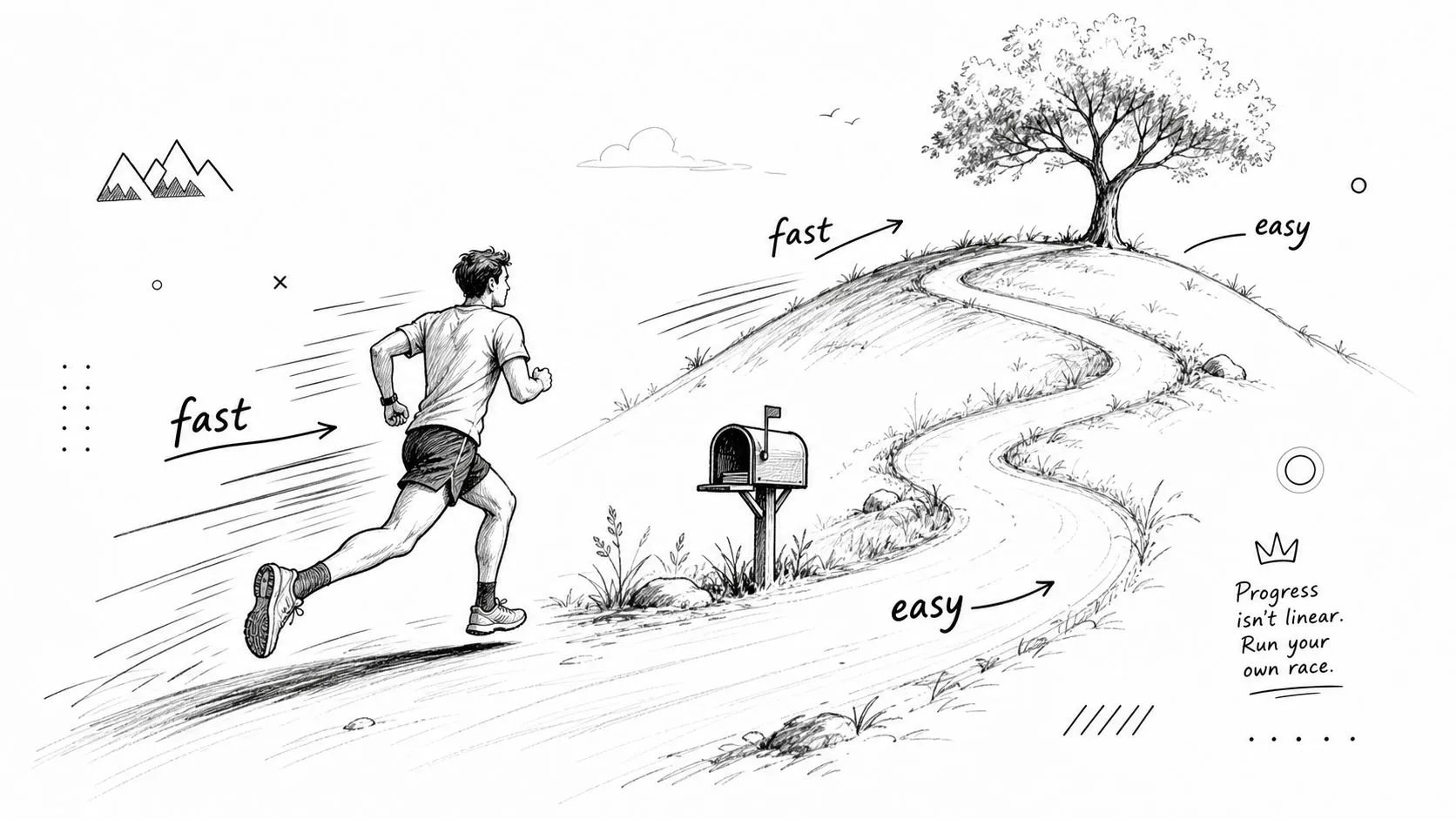
Tempo and threshold sessions are where a lot of steady fitness gets built. These workouts sit just below the redline, so you can hold the pace long enough to stress endurance without tipping into the kind of effort that ruins the next few days. For runners and riders, that makes them a practical middle ground when you want progress but still need to show up for the rest of the week.
A coach might write a session like 3 x 8 minutes at 88% FTP with easy recovery, or a longer continuous effort such as 20 to 30 minutes at 85% FTP. Those formats fit the threshold pattern used in endurance training and line up with common lactate-threshold structures. On the running side, threshold work often uses sustained bouts and mixed sessions built around race pace and controlled fatigue. If you want a clearer breakdown of how those efforts fit together, this guide to lactate threshold workouts is a useful companion.
Writing a clean prompt for tempo work
Plain language works well here. “20 minutes hard but sustainable” gives TextFit enough detail to build a threshold workout preset, and “steady hard” or “comfortably hard” can still be turned into a structured session that you can review before syncing. That matters because a coach’s cue is often clear in conversation, but less clear on a watch screen unless the steps are formatted properly.
Tempo work usually feels easier than it should at the start. That is where pacing mistakes begin. The first few minutes can feel controlled, which tempts people to drift a little too fast. By the middle of the session, the effort should still feel purposeful, but not like a sprint you are trying to survive. If the pace falls apart early, the target is too high, the warmup was too short, or both.
Pro tip: keep the first interval conservative and let the last one be the hardest. That approach gives you a cleaner read on whether the session was threshold work or a hard day with no shape. It also makes the workout easier to repeat in a training block, which is the main value of this style.
Use tempo and threshold sessions in base and build phases, especially when the week already has other stressors. A polarized week often keeps most work easy and places one structured effort in the middle of the week, which makes threshold a useful anchor rather than a daily habit. TextFit helps here because you can describe the workout in your own language and still get clean step-by-step intervals on Garmin or Wahoo without rebuilding them by hand.
5. VO2 Max Intervals
VO2 max intervals are the sessions that make “hard” feel generous. The effort sits close to the top end of what you can sustain aerobically, so the work is short enough to repeat, but demanding enough that each rep asks for full focus. Athletes usually know this workout is right when the timer cannot move fast enough.
A good VO2 session keeps the hard parts in the 1 to 5 minute range, with recovery that matches the work or stays at about half the interval length. That structure shows up often in endurance programming, and it is why sets like 4 x 4 minutes or 5 x 5 minutes are common in real plans. For runners, the same idea often appears as repeatable hard efforts with enough rest to keep the quality high as seen in running interval examples, while programming notes for interval work also point to short, hard repetitions that are easy to execute cleanly as reflected in interval programming recommendations.
Convert the note before the workout starts
A clean prompt sounds like, “5 hard 4-minute efforts with 3-minute recoveries.” That is short enough for a coach to text and structured enough for TextFit to turn into a device-ready workout without rebuilding each block by hand. The benefit is simple: the timing stays consistent, and the session you planned is the session you perform.

VO2 work punishes sloppy starts. If the first interval feels too comfortable, the pace is probably too low, but if you blast the opening rep, the rest of the set turns into survival mode. The better approach is controlled aggression, then steady execution across the whole workout.
Pro tip: make the first rep your calibration rep. It should be hard, but not reckless. If the final interval is the first time you feel fully extended, the set was paced well.
These sessions fit best when you want a strong aerobic hit without turning the whole week into a grind. That is why many athletes keep them separate from the heaviest threshold days and use them when they can recover properly afterward. If you want a clearer picture of where this style fits inside a full training block, the advantages of interval training are easier to see when the workout is built with a clear purpose from the start.
VO2 max work also pairs well with structured tech. Write the workout in your own words, keep the recoveries explicit, and let TextFit turn the note into a session your Garmin or Wahoo can follow step by step. That removes guesswork at the start line and keeps the session focused on effort, not on menu navigation.
6. Pyramid / Ladder Intervals
Pyramid and ladder sessions solve a problem that straight repeats sometimes create: monotony. Instead of repeating the same duration over and over, you build up and then come back down, which gives the workout a rhythm that many athletes find easier to stay engaged with.
A classic running ladder might look like 1-2-3-4-3-2-1 minutes of hard effort with equal recoveries. That structure shows up in coaching because it scales stress gradually, then eases it back down without losing the quality of the later reps. Longer versions can be built around cycling efforts too, including ascending ladders that stretch from short to long intervals and back again in the same spirit as mixed interval structures described in running guidance.
A format that keeps athletes engaged
The prompt can be written almost exactly as you’d say it. “Pyramid from 1 to 5 minutes hard with 2 minutes easy between” is enough for TextFit to build the structure automatically. That’s especially useful when you want the device to cue the transitions without forcing you to rebuild the entire shape by hand.
Start smaller if this format is new. A 1-2-3-2-1 version teaches the rhythm without making the workout so long that pacing falls apart. The longer the pyramid gets, the more disciplined the early reps need to be, because going too hard at the bottom destroys the top.
Build the workout shape around the athlete, not the other way around.
There’s a real tactical advantage here. Pyramid sessions let you feel multiple gears in one workout, which helps runners and cyclists learn how their body responds as fatigue climbs. That makes them useful for race prep, but also for general fitness when you want one session that develops both control and resilience.
If your power meter or GPS struggles mid-session, use perceived exertion to keep the workout on track. The structure still works even when the numbers are imperfect, as long as the effort rises and falls in the right places. The point is a repeatable training stimulus, not a perfect chart.
7. Recovery / Active Recovery Intervals
Recovery work gets ignored because it does not look dramatic. That is a mistake. Easy sessions are what let the hard sessions land, and interval plans fall apart fast when every day is treated like a race.
A clean recovery ride usually stays around 60% FTP, while recovery running stays conversational and relaxed. Beginners also do better with short efforts like 30 seconds hard with 2 minutes easy, a reminder that the easy part shapes the workout as much as the hard part does per Mayo Clinic guidance cited in NSCA’s interval article. The same guidance says intervals can be done 2 to 3 times per week, not on consecutive days, so recovery days are part of the system, not an optional extra.
Make recovery easy enough to work
A useful prompt can be plain and almost dull. “Easy 45 minutes” is enough for TextFit to turn a recovery note into a structured session on your device. That matters because many athletes do not need more pressure to work hard. They need a clear rule that lets them back off without second-guessing the session.
Recovery workouts can be rides, runs, swims, or simple movement focused on form. A cyclist might spin lightly after a hard trainer session. A runner might shuffle through 30 to 40 minutes at conversational pace. The aim is blood flow and coordination, not training stress.
If you can’t speak in full sentences, it is not recovery.
That conversation test works because it cuts through ego and gadget noise. HRV and resting heart rate can help you confirm whether recovery is happening, but the session itself should already feel light. If you are forcing the pace, the workout is no longer doing its job.
Recovery days also protect the quality of the next interval block. A good coach does not try to squeeze every ounce out of every day. They leave enough freshness on the table so the athlete can hit the next hard workout with stable legs and a clear head.
8. Repeats / Anaerobic Capacity Intervals
Repeats are the no-nonsense sessions that build the ability to hit hard, recover, and hit again. They’re shorter than VO2 work and more explosive than threshold training, which makes them ideal when the goal is raw power, race moves, or handling surges late in a race.
A common expert framing puts anaerobic-capacity intervals at 10 to 60 seconds with pauses about 3 to 4 times longer than the work bout in interval programming guidance for athletes. Cycling analysis also highlights 20 to 60 second efforts for anaerobic capacity and notes that short sprint work may need 5 to 10 minutes of recovery to restore the ATP-CP system in a cycling interval breakdown. Those are the workouts where full recovery isn’t laziness. It’s part of the design.
Turn a short note into a full session
A coach might write, “6 one-minute hard efforts, full recovery between.” TextFit can convert that into a structured repeat workout with clear work and recovery blocks, ready for Garmin or Wahoo instead of living as an ambiguous note. That’s a good fit for repeats because the details matter. Too-short recovery changes the adaptation, and inconsistent timing changes the quality.
A runner might use 8 x 200m fast with easy jog recovery. A cyclist might use 4 x 2 minutes at 115% FTP with long easy spin recovery. Both are examples of repeat work that should feel sharp, controlled, and repeatable rather than chaotic.
The biggest mistake is letting form break down. Once the motion gets sloppy, the session stops training power and starts training fatigue compensation. End the workout before technique falls apart.
For competitive phases, this kind of session doesn’t belong everywhere. Keep it limited and intentional, especially when the rest of the week already includes threshold or VO2 work. That’s how you get the benefit without dragging the rest of the plan down.
8-Point Interval Workout Comparison
| Interval Type | 🔄 Implementation complexity | ⚡ Resource / time efficiency | 📊 Expected outcomes | 💡 Ideal use cases | ⭐ Key advantages |
|---|---|---|---|---|---|
| High-Intensity Interval Training (HIIT) | High, intense, short bouts; requires baseline fitness and strict pacing | Time-efficient (15–30 min); minimal equipment; needs accurate timing/monitoring | Large calorie burn, improved VO2max and anaerobic capacity | Time-constrained athletes seeking fast cardiovascular gains | Highly effective for rapid cardiovascular adaptation; scalable intensity |
| Sweet Spot Intervals | Moderate, requires adherence to zones and periodized blocks | Time-costly (longer sessions/blocks); best with power or HR monitoring | Improved aerobic capacity and muscular endurance over weeks | Base/build-phase cyclists and runners aiming steady progression | Sustainable, evidence-backed stimulus with lower burnout risk |
| Fartlek Training | Low, unstructured, relies on athlete feel and terrain cues | Variable duration (30–60 min); minimal gear; low setup overhead | Better pace awareness, running economy, and mental freshness | Runners wanting flexible, engaging training (trails, groups) | Highly adaptable and motivating; good hill-strength stimulus |
| Tempo / Threshold Intervals | Moderate–High, sustained efforts needing precise pacing | Efficient stimulus per session (10–40 min efforts); requires FTP/threshold data | Raises lactate threshold; improves sustainable race pace | Athletes targeting 20–60 min race efforts (time trials, half-marathon) | Direct, measurable improvements in race-specific fitness |
| VO2 Max Intervals | High, near-max efforts with strict recovery control | Moderate session length (35–50 min); needs power/HR and good warm-up | Increases VO2max and aerobic ceiling quickly | Competitive athletes peaking 4–8 weeks before key races | Effective for boosting peak aerobic power in a short window |
| Pyramid / Ladder Intervals | Moderate, requires planning to manage ascending/descending loads | Variable duration; scalable volume; needs attention to pacing | Builds pacing discipline, mixed aerobic/anaerobic stress | Athletes seeking variety and race-simulation for uneven efforts | Flexible structure that reduces monotony and trains pacing |
| Recovery / Active Recovery Intervals | Low, straightforward, low intensity, easy to execute | Low intensity but time investment (30–90 min); minimal equipment | Promotes recovery, clears metabolites, supports adaptation | All athletes between hard sessions; essential for sustainable training | Essential for recovery; low-risk and broadly scalable |
| Repeats / Anaerobic Capacity Intervals | High, maximal efforts require full recovery and strict form | Moderate session length (40–60 min); needs monitoring and full recovery | Improves peak power, sprint capacity, and lactate tolerance | Sprinters and racers prepping for breakaways or decisive surges | Best for developing anaerobic power and race-deciding accelerations |
Your Training, Simplified
Having a list of interval workouts is one thing. Executing them well is another. The win comes from reducing the friction between the plan and the session, because the less time you spend building workouts, the more time you spend training. That’s why plain-language prompts matter. They let you describe what you want in a coach-like sentence, then turn that note into a structured session you can review, tweak, and sync.
The best interval workout examples aren’t only hard. They’re specific. A short HIIT session has a different job from sweet spot work. Fartlek builds freedom and feel. Threshold sessions develop sustainable pressure. VO2 max intervals push the aerobic ceiling. Pyramid sets keep athletes engaged. Recovery sessions let adaptation happen. Repeats sharpen power and race-day punch. Each one has a place, and each one works better when the structure is clear before the workout starts.
That’s where TextFit fits. It turns free-form workout text, in any language, into structured intervals you can send to Garmin, Wahoo, or Apple Watch, which helps whether you’re a runner, cyclist, triathlete, or a coach whose athletes write in different languages. If your notes already live in messages, spreadsheets, or voice drafts, the next step is not a bigger planning system. It’s a faster translation layer.
Pick the session that matches the goal and type it into TextFit as one line, in any language: “5 x 4 min hard with 3 min easy.” Review the structured workout, then sync it to Garmin or Wahoo through your intervals.icu connection or schedule it on Apple Watch, and let the device do the counting. Free to start, no sign-up needed.