What Is Fartlek Training? Speed Play Explained

Fartlek training is continuous running or riding with variable surges of faster effort, usually guided by feel, landmarks, or time, not a stopwatch. What is Fartlek training in plain terms? It’s speed play, and it sits between easy aerobic work and formal interval sessions, which rely on exact work and rest.
If you’ve ever wondered why one coach says “run to the tree, ease off, then push to the corner” while another hands you a precise 10 x 1 minute plan, this is the missing bridge. Fartlek keeps the movement continuous, but it gives the session a rhythm that feels natural instead of mechanical.
Table of Contents
- What Fartlek Training Actually Means
- Where Fartlek Came From and Why It Endures
- The Physiology Behind Variable-Intensity Work
- Fartlek vs Intervals vs Tempo Runs
- How to Plan a Fartlek Session That Fits You
- Three Sample Fartlek Workouts You Can Run Today
- Turning Fartlek Notes into Garmin and Wahoo Workouts
- Putting Fartlek to Work This Week
What Fartlek Training Actually Means
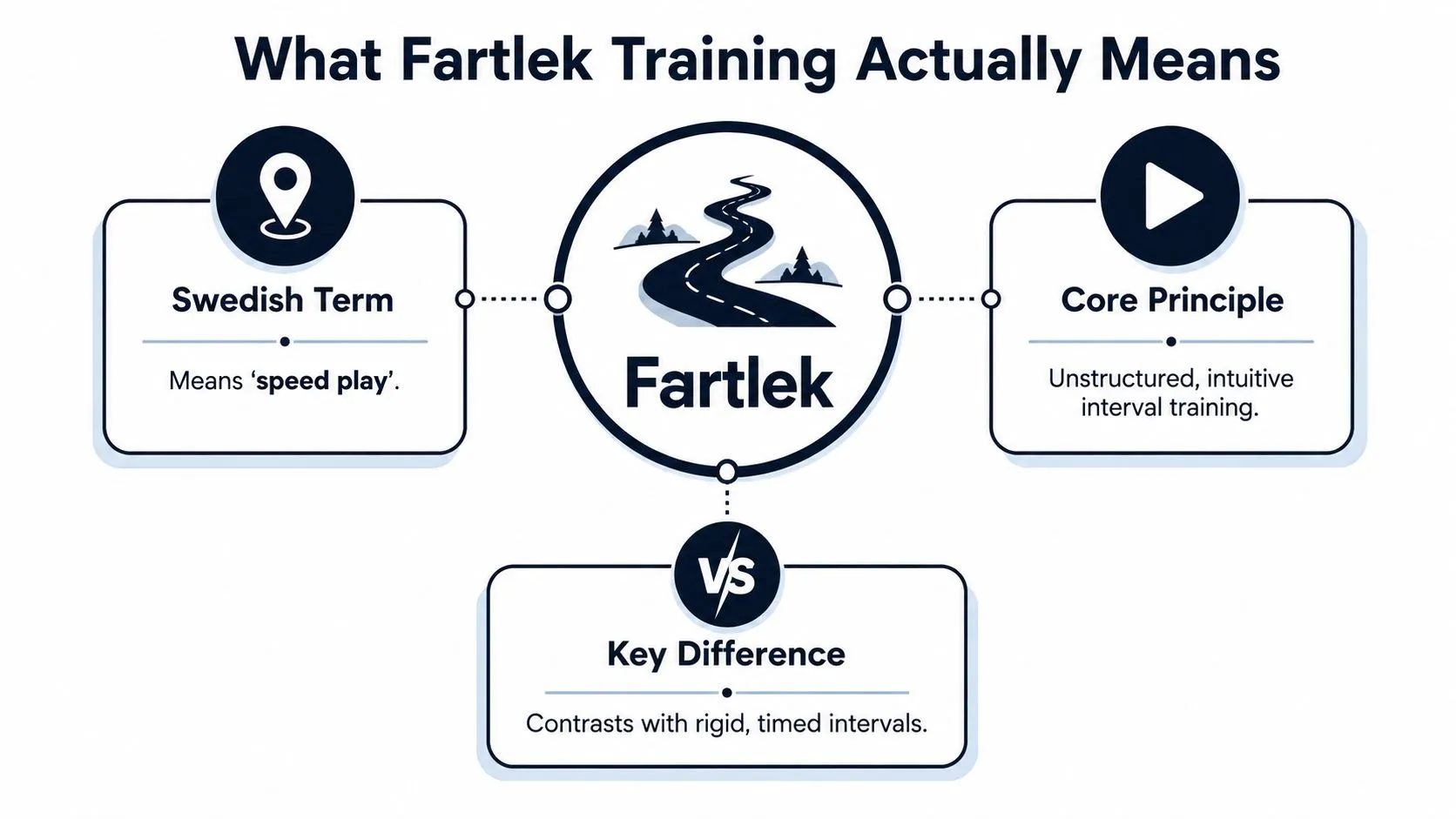
Fartlek is continuous movement with changes of pace. You keep running, riding, or moving forward, then layer in faster surges before settling back into easier effort. That simple pattern is what makes it useful, because the session stays aerobic while still giving you quality work.
A runner might say, “I’ll jog easy, sprint the next lamp post, then float until the next hill.” That’s fartlek. A cyclist might say, “Ride steady, press hard over the rise, recover on the descent.” Same idea, different sport.
The three easiest ways to think about it
Landmark-based fartlek uses things you can see, like a tree, mailbox, sign, or hill crest. You surge to the next marker, then ease off until the following one.
Time-based fartlek uses simple blocks such as 1 minute hard / 1 minute easy. This keeps the session tidy without making it feel like a track workout.
Pace-based fartlek asks you to run by effort or approximate pace rather than exact splits. In practice, that often means controlled surges, not a full sprint.
Practical rule: If you stop the run to recover, it’s drifting away from fartlek and toward interval training. The defining feature is continuous motion.
That distinction matters because “unstructured” doesn’t mean random. Good fartlek still has shape. You choose the pattern, the terrain, and the level of effort, then keep the workout flowing without breaking it into hard stops.
Where Fartlek Came From and Why It Endures
What gives a training method staying power for nearly a century? Fartlek answers that with a simple idea: changing pace inside a continuous run so the athlete can adapt to the course, the day, and the effort.
Fartlek was developed in the late 1930s by Swedish Olympian Gösta Holmér, and the original approach centered on continuous running with pace changes over natural terrain such as hills and trails (historical overview). The Swedish term means “speed play,” and that name still fits the method. It is free enough to feel natural, but directed enough to count as training.
Early fartlek sessions were not built as tidy, stopwatch-driven sets. Historical accounts describe runs of about 12 km with roughly 5,000 m completed faster than race pace within that run, which shows the method’s character: flexible, but still demanding (historical overview). Athletes were asked to keep moving, vary effort, and respond to terrain instead of repeating the same fixed rep over and over.
Why that origin still fits modern training
The original method tolerated a wide range of surge lengths. Historical descriptions note bursts from 50 m to 3,000 m, and that range is one reason fartlek spread so easily through distance running (training history and examples). One runner can use short, sharp pickups. Another can stretch the surges longer and make them steadier.
The same idea still shows up in modern sessions. A coach may prescribe 1-minute hard / 1-minute easy repeats, or longer efforts such as 3-minute, 5- to 8-minute, or even 10- to 13-minute surges, depending on the goal and the athlete (training history and examples). That is why fartlek works so well on roads, trails, and mixed terrain where exact splits are harder to hold. A watch can guide the effort, but the session still keeps its original free-form feel.
That flexibility explains why fartlek has endured. It fits athletes who train on changing routes, in shifting weather, and on days when the body does not match a rigid plan. The structure can be simple enough to write into a Garmin or Wahoo workout, yet loose enough to preserve the feel of choosing your own surges as you run.
The Physiology Behind Variable-Intensity Work
Why does fartlek feel so different from a steady run, yet still build fitness in a clear, trainable way? The answer is that it keeps you moving continuously while the effort rises and falls. Your body never drops into full rest, so the aerobic system keeps working even during the easier portions, and the harder surges still feel like part of one connected run.
The most important piece is active recovery. Instead of stopping, you jog or ride easily until breathing settles and the effort becomes manageable again. That keeps heart rate and oxygen demand high, which is one reason fartlek fits roads and trails so well, especially when the terrain does not match track-style splits, as shown in the ASICS training guide.
How active recovery changes the effort
Active recovery changes the workout from simple speed bursts into a skill session for pacing under load. You are not trying to empty the tank on every surge. You are practicing how to push, recover while still moving, and push again without losing form.
A useful coaching cue is simple: faster segments should usually be controlled, not all-out. If the easy portions turn into walking, the hard parts were too aggressive for the session.
A practical way to write the workout is to use repeated surges of about 1 to 5 minutes with equal or slightly shorter easy recoveries. That rhythm keeps the session moving back and forth between effort and relief while preserving the aerobic thread of the run, and it also fits the kind of pacing structure described in Runner’s World coaching guidance. Shorter recoveries usually let the next effort start before you feel completely fresh, which is part of the point.
The length of the surge changes the training effect. 15 to 60 seconds tends to emphasize speed and acceleration. 2 to 5 minute efforts ask more of the transition between aerobic and anaerobic work. Longer 5 to 13 minute surges keep you near threshold longer and require steadier control. If you want a quick comparison with more formal repeat-based sessions, this guide to interval training advantages helps show why fartlek still feels freer, even when it is carefully planned.
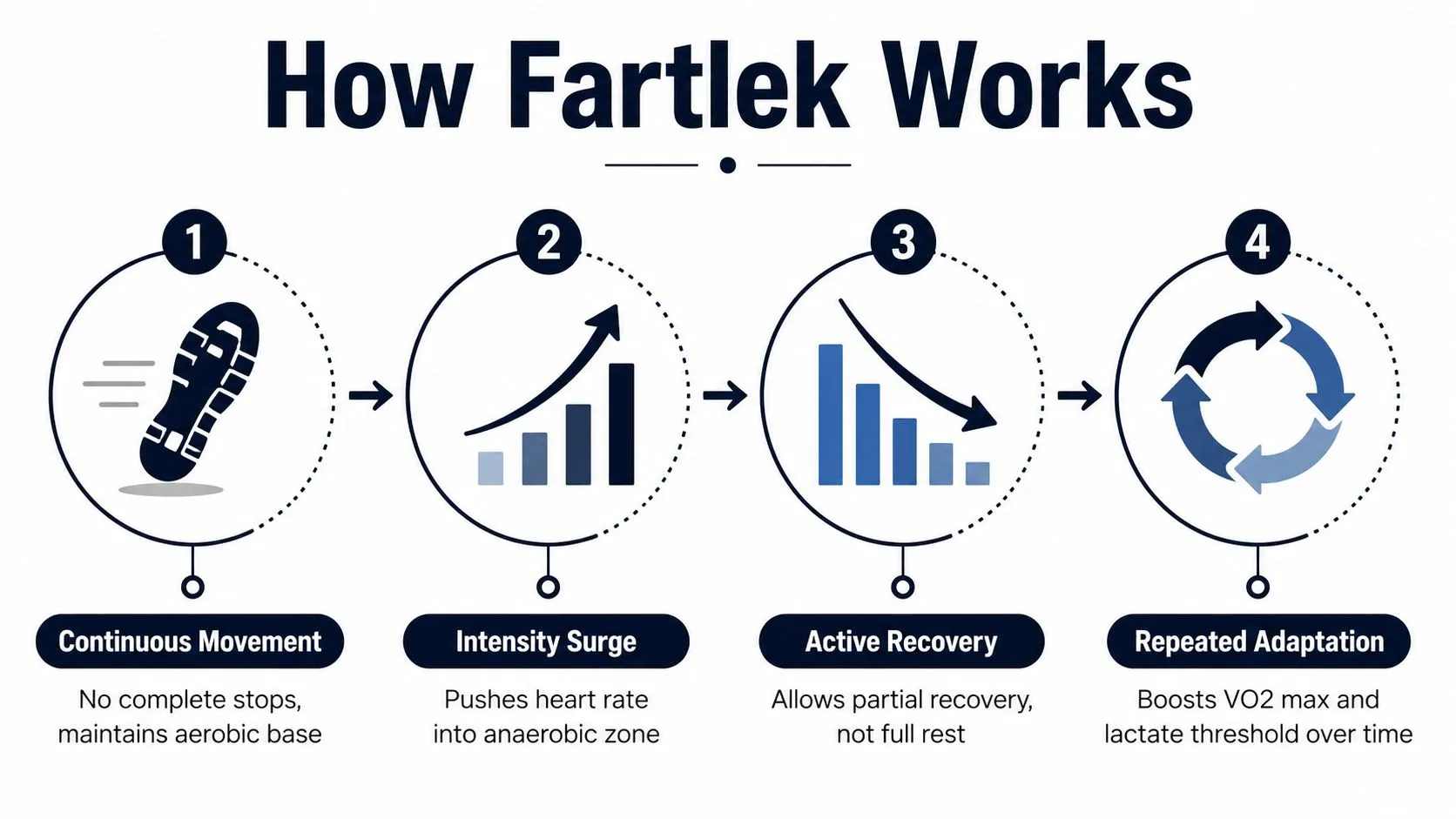
One practical coaching reference notes that the harder running in a fartlek session often totals about 15 to 20 minutes, with interval lengths commonly around 2 to 5 minutes and recoveries around 1 to 3 minutes. That is a useful guardrail for athletes who hear “unstructured” and assume the session has no shape at all, and it matches the kind of session design described in TrainingPeaks coaching guidance.
Fartlek vs Intervals vs Tempo Runs
Which workout should you pick when the goal is to run hard without making every session feel the same? Fartlek, structured intervals, and tempo runs can all build fitness, but each one solves a different training problem. Fartlek is the best fit when you want feel-based variety and route freedom. Structured intervals are better when you want exact pace or power targets. Tempo runs work best when you want one steady block near threshold.
| Criterion | Fartlek | Structured Intervals | Tempo Runs |
|---|---|---|---|
| Main feel | Flexible, playful, responsive | Precise, repeatable, measurable | Sustained, controlled, steady |
| Work structure | Variable surges inside continuous movement | Fixed work and fixed recovery | Continuous hard effort |
| Best use | Roads, trails, mixed terrain, race rhythm | Track sessions, power targets, exact pacing | Threshold development, sustained control |
| Recovery style | Active, usually easy jogging or riding | Defined rest or easy recovery | Minimal disruption, often no full stop |
| Planning style | Landmark, time, or effort based | Pre-set reps and rest | One long block at a target intensity |
A quick way to sort them is to ask what kind of limitation you are working with. If the route, mood, or terrain makes strict splits awkward, fartlek fits the day. If you want clean repeats that you can compare session to session, structured intervals are the cleaner tool. If you need a long, steady effort that teaches threshold rhythm, tempo runs cover that job better.
Fartlek often sits between the other two because it keeps the workout flexible while still asking for real quality. It can be written as natural-language guidance, then turned into a watch-ready session on Garmin or Wahoo without losing the original feel. A coach might say, “easy running, then strong between two lamp posts, then recover to the next hill,” and that same idea can be translated into time, distance, or effort cues on a device. If you want a closer look at why that repeat-based structure feels different, the interval training advantages guide explains why precise sessions are useful when exact control matters.
Tempo runs still matter when the goal is sustained rhythm and controlled discomfort. Fartlek gives athletes more room to respond to the day, which is why runners, cyclists, and triathletes keep using it when one workout needs to cover several training goals.
How to Plan a Fartlek Session That Fits You
A useful fartlek session starts with three choices. Decide how long each surge will last, decide how much recovery comes after it, then decide how much hard running you can handle before the workout stops feeling like training and starts feeling like a race.
That structure gives you freedom without drifting into guesswork. A coach can write the session in plain language, then the same workout can be turned into a watch-ready session on Garmin or Wahoo without losing the feel of the original run. If you want help setting the effort level for those surges, a running training pace guide can help you match pace to the workout instead of guessing on the day.
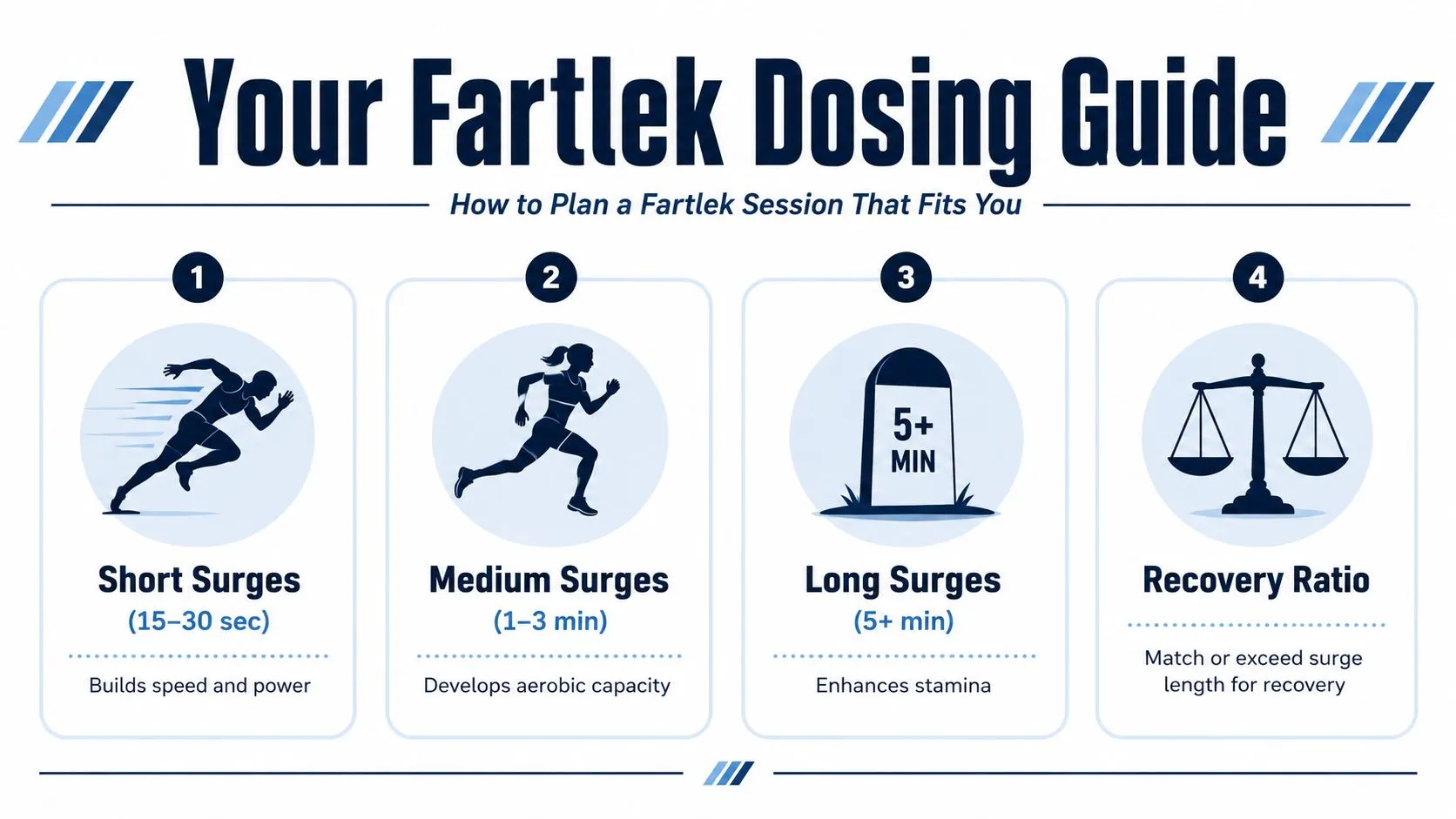
The clearest coaching guidance keeps the hard running to about 15 to 20 minutes total, with most surges in the 2 to 5 minute range and recoveries around 1 to 3 minutes. That gives the session enough shape to matter while still leaving room for terrain, weather, and how you feel.
Match the prescription to the goal
Short surges of 15 to 60 seconds are the best fit when the goal is quicker leg turnover and sharper acceleration. They are easy to slot into an easy run, and they do not need much mental setup.
Middle-length surges of 1 to 5 minutes are the most flexible choice. They ask for steady pace control without the grind of a track set, so they work well for many runners.
Longer surges of 5 to 13 minutes suit athletes who want threshold-like work with less monotony. One coaching cue used in long-run fartlek is to keep the surges only about 15 to 20 seconds per mile faster than long-run pace. That keeps the effort controlled and repeatable.
Practical rule: If the workout is meant to stay aerobic, the faster parts should feel strong but repeatable. If you cannot see yourself doing one more surge, the early reps were probably too aggressive.
Three simple ways to prescribe it
- Landmark-based: Run hard to the next lamp post, tree, bend, or hill crest, then jog easy to the next marker.
- Time-based: Use a watch for something like 1 minute hard / 1 minute easy, or longer blocks when you are ready.
- Pace-based: Set the effort by feel or approximate pace, especially on a long run where you want quality without rigid splits.
If you are unsure where to begin, pick one session style and keep the rest of the run easy. The goal is to finish with a clear training signal, not to squeeze every possible intensity into one outing.
Three Sample Fartlek Workouts You Can Run Today
A beginner fartlek doesn’t need fancy pacing. Start with a 30-minute easy run, then add eight 30-second surges at landmarks you can see, like signs, poles, or the top of a short rise. Keep the recoveries easy and jog until you feel ready for the next surge.
An intermediate version can be written almost exactly like a coach would text it. Warm up for 10 minutes, then run 10 x 1 minute hard / 1 minute easy, then cool down for 10 minutes. That’s a clean way to teach rhythm without overwhelming the athlete with too many moving parts.
A longer session for experienced runners
For an advanced athlete, use a 50 to 60 minute run that layers three different effort bands. Start with short surges of 15 to 60 seconds for neuromuscular speed, then move into 2 to 5 minute efforts for a 5K to 10K feel, then finish with 5 to 13 minute surges for threshold work. The point isn’t to max out every segment. It’s to change gears on purpose.
Coach’s cue: Keep the early surges smoother than you think you need. If you blast the first reps, the workout turns into survival instead of training.
Here’s a simple way to remember the progression:
- Beginner: Easy run plus short landmark sprints.
- Intermediate: Repeatable 1 minute on, 1 minute off blocks.
- Advanced: Mixed-duration surges inside one longer run.
The common thread is controlled speed, not chaos. Each workout gives you a different dose, but all three keep the same fartlek identity: continuous movement with purposeful variation.
Turning Fartlek Notes into Garmin and Wahoo Workouts
Fartlek is often written the way people coach it. A note might say, “Run easy for 10 minutes, then 8 x 1 minute hard and 1 minute easy, then cool down for 10.” That kind of plain-language description is a perfect fit for a text-first workout builder because the athlete already knows the intent.
TextFit is built around that workflow. You type the session in plain language, in any language. It picks out the warm-up, repeats, recoveries, and cool-down, then turns them into a structured workout you review, tweak, and send to your Garmin or Wahoo. That matters when coach notes aren’t written in tidy training-app language.
Why fartlek descriptions convert well
Fartlek notes already contain the core pieces software needs. They usually include a warm-up, one or more effort blocks, some kind of easy recovery, and a cool-down. Because those pieces are stated in plain words, they translate cleanly into steps and repeats rather than forcing you to drag boxes around on a screen.
The same logic works whether the session says “next lamp post” or “3 minutes hard, 2 minutes easy.” The tool can structure the workout while preserving the coach’s intent, which is the main advantage of a text-first approach. For runners and cyclists who want a watch-ready session without manual file editing, that’s a much faster path from plan to execution.
If you want another look at the broader workflow, the running interval training app guide shows how plain workout notes become device-ready sessions.
What to check before you sync
- Warm-up length: Make sure the easy lead-in matches the session.
- Repeat count: Check that the number of surges matches the coach note.
- Recovery wording: Confirm whether the easy part is a jog, ride, or just “easy.”
- Cool-down: Don’t accidentally remove it when editing.

That’s the advantage of fartlek training. The workout stays flexible in concept, but the delivery becomes precise enough for a watch or head unit to guide you without making the run feel robotic.
Putting Fartlek to Work This Week
Pick one fartlek style and keep it simple. If you want speed, choose short surges. If you want 5K to 10K support, choose middle-length repeats. If you want threshold control, go longer and keep the recoveries short enough to maintain rhythm.
Then log the session by feel, not just by pace. Notice where you stayed smooth, where the recoveries felt too easy, and where the surges drifted too hard. That feedback tells you more than a single split ever will.
A good next step is to take one coach-style note and make it repeatable on your device, so the session is ready before you lace up. Once you can do that, fartlek stops being a vague word you’ve heard once and becomes a training tool you can use on purpose.
Want to try it on this week’s fartlek? Open TextFit and type the note as you’d say it, in any language: “10 min easy, 10 x 1 min hard / 1 min easy, 10 min easy”. You get a structured session to review, then it syncs to your Garmin or Wahoo and schedules on Apple Watch. Free to start, no sign-up needed.