Top 10 Zwift Alternatives: Find Your Perfect Ride

You finish work late, roll the bike onto the trainer, and realize the app matters more on nights like this than it does on your best days. Some riders need a platform that makes an hour pass faster. Some need a tool that keeps interval targets honest. Others need a simple way to load coach-built sessions without fighting file formats or rebuilding workouts by hand.
Not looking for another riding app? If all you want is to run structured intervals on the trainer you already own, without a $20/month subscription, read how to use a smart trainer without Zwift.
That is why looking beyond Zwift makes sense for a lot of riders. The question is not which app has the longest feature list. The question is what you need the app to do when motivation is low, time is tight, and the session still needs to count.
After using most of these platforms with athletes and in my own training, the trade-offs are usually clear once you strip away the marketing. ROUVY and FulGaz appeal to riders who want something closer to real roads. TrainerRoad, Xert, and Wahoo SYSTM make more sense for athletes who care more about progression, load, and execution than virtual scenery. MyWhoosh and Kinomap are often value picks. GoldenCheetah is a different category altogether, powerful if you want control and analysis and are willing to do more setup.
One pain point serious riders run into fast is workout portability. If your training comes from a coach, TrainingPeaks, Final Surge, or a custom builder, the app needs to accept those sessions cleanly. That includes newer tools that generate workouts from plain language. If that is part of your setup, it helps to understand how a structured workout plan built from any source fits into each platform before you commit.
This guide is built around that practical choice. For each app, the key question is simple. Who is it for?
Table of Contents
- 1. ROUVY
- 2. TrainerRoad
- 3. FulGaz
- 4. MyWhoosh
- 5. Kinomap
- 6. Wahoo SYSTM (Wahoo App)
- 7. Tacx Training (Garmin)
- 8. Xert
- 9. BigRingVR
- 10. GoldenCheetah
- Top 10 Zwift Alternatives: Feature & Pricing Comparison
- Finding the Right Indoor Road for You
1. ROUVY
A rider signs up for Zwift, gets through a few weeks, and realizes the problem is not the training. It is the setting. If staring at a game world makes indoor miles feel artificial, ROUVY is usually the first platform I recommend.
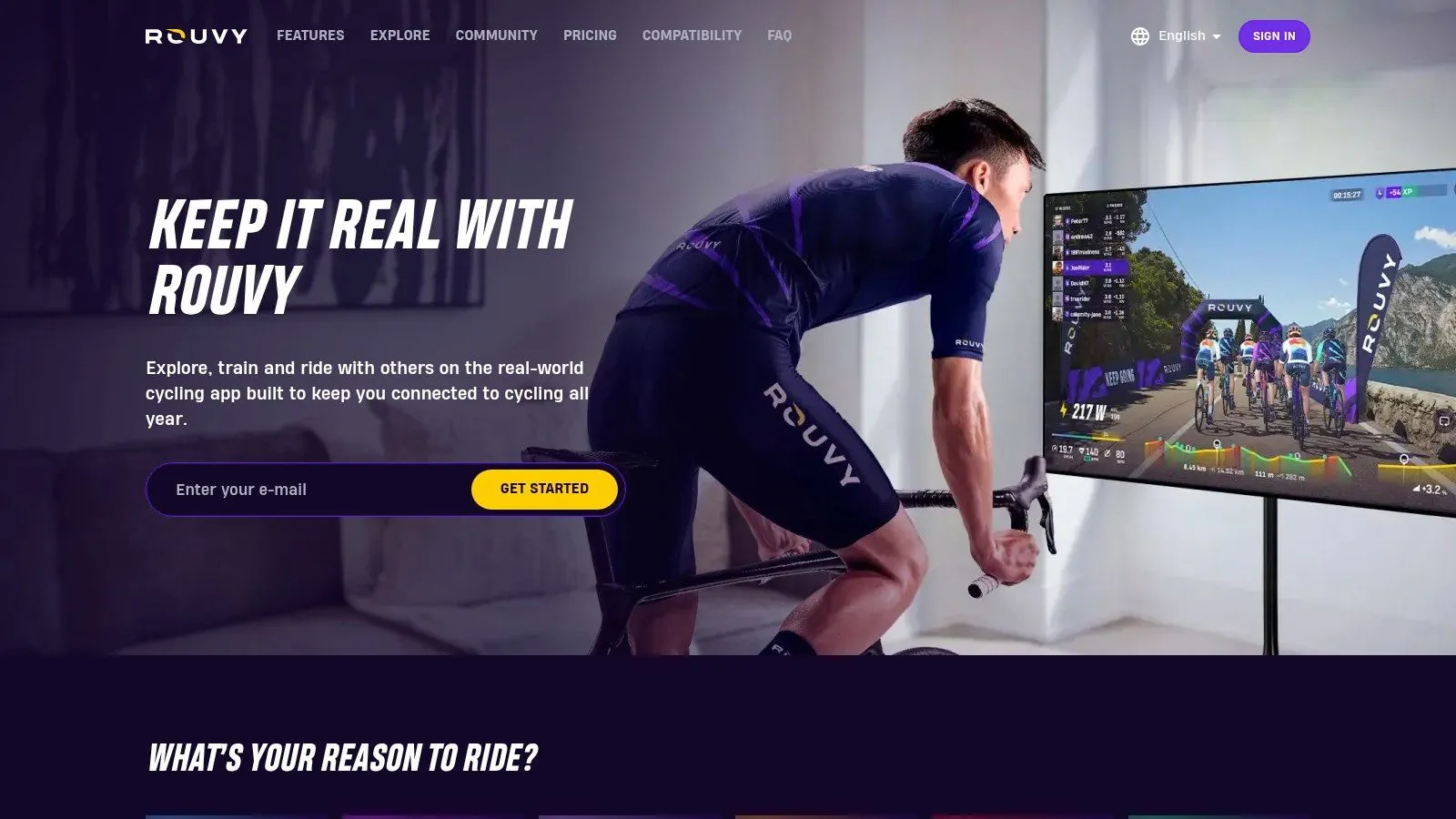
ROUVY works best for cyclists who want the trainer to feel closer to outdoor riding. Its filmed routes give climbs, rolling terrain, and race courses more context than a virtual map can. That matters for steady endurance work and event prep, because the road itself helps pace the session.
Price also helps its case. ROUVY sits in a middle tier that often feels easier to justify than a premium virtual-world subscription, especially if badges, achievements, and social ride density are not what keep you consistent. The bigger point is value by use case. Riders who want route realism and enough workout support to cover most training days often get more from ROUVY than from a more game-like app.
Why riders choose ROUVY
ROUVY is a strong choice for athletes who want one platform to cover both training and course familiarity.
- Best fit for route realism: Real video routes make long climbs and race recon feel purposeful, not simulated for its own sake.
- Best fit for self-directed riders: It suits athletes who do not need a busy social world to stay on the bike.
- Best fit for mixed training weeks: Endurance rides, tempo sessions, and event-specific practice all make sense here.
- Less ideal for pure community motivation: Riders who feed off pack dynamics, constant chat, and in-app events may find it too quiet.
That trade-off matters. I like ROUVY most for riders training for fondos, triathlons, climbing events, and outdoor races on known terrain. It is less compelling for cyclists who use indoor riding mainly as entertainment or as a substitute for a local group ride.
Structured workouts are good enough for many riders, but the important question is whether the app fits your existing training process. Serious athletes often already have intervals from a coach, TrainingPeaks, a spreadsheet, or a text-based builder. If you are still setting zones by feel, start with a proper cycling FTP test protocol so the sessions you bring into any platform are worth doing.
Who it’s for: Choose ROUVY if you want indoor riding to feel like practice for outdoor riding. Skip it if the social layer is the main reason you train indoors.
Train on ROUVY’s official site.
2. TrainerRoad
TrainerRoad doesn’t pretend to be a virtual world. That’s its strength.
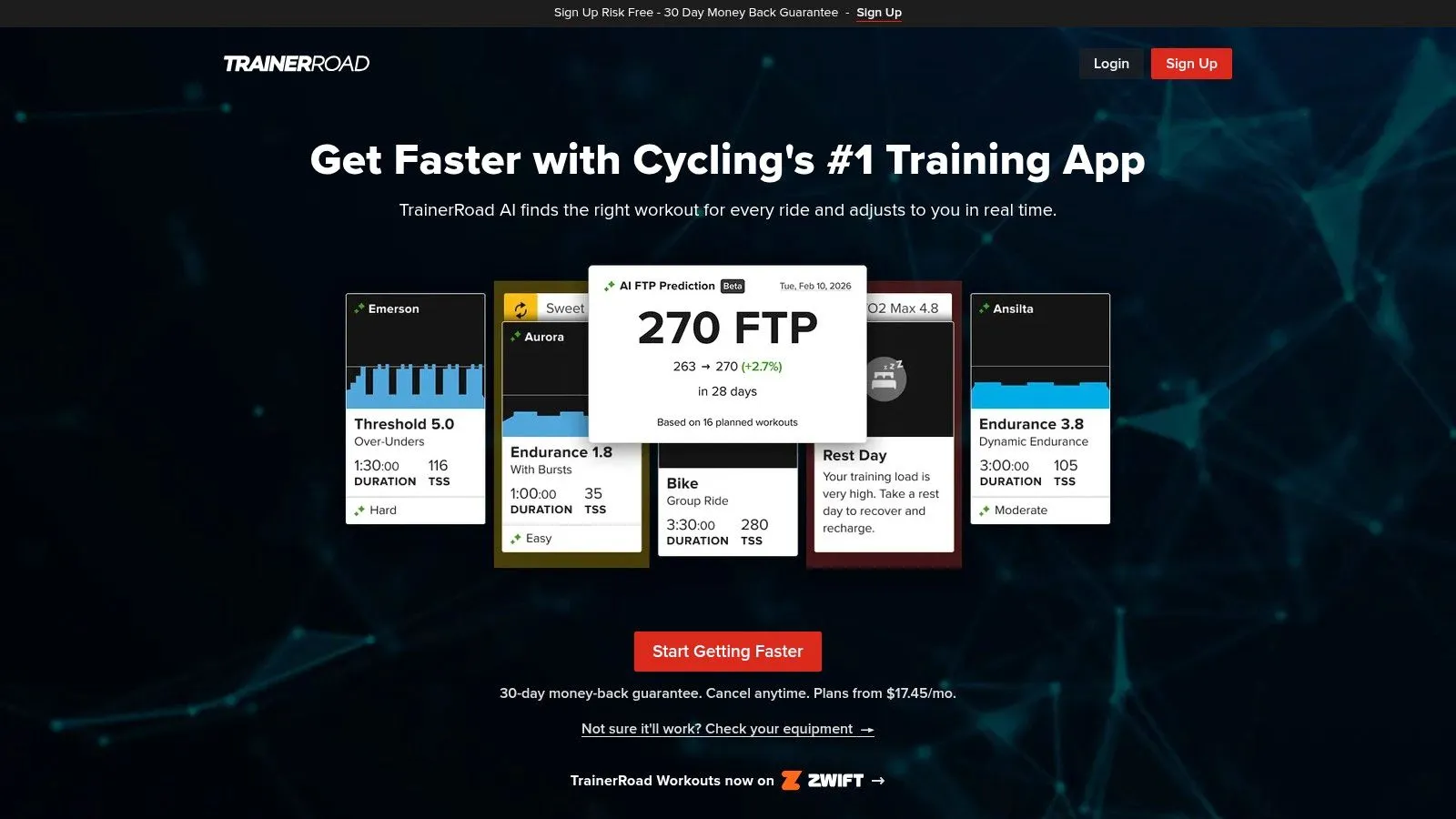
If you care most about getting faster, it remains one of the cleanest answers among Zwift alternatives. The interface points you toward plans, progression, and execution. You’re not choosing roads because they look fun. You’re choosing work because it matches the adaptation you’re trying to force.
That makes TrainerRoad especially useful for riders training around limited time. When you only have an hour, a platform built around structured intent usually beats one built around open-world possibility.
Who It’s For
TrainerRoad suits riders who already know that motivation comes after the workout starts, not before.
- Best for performance-first cyclists: The platform is centered on plan builder logic, adaptive training, and repeatable progression.
- Best for head unit users: It plays nicely with Garmin and Wahoo workflows.
- Weak fit for social riders: There’s no real virtual hangout layer, so it won’t replace the group ride feeling.
The trade-off is obvious. You gain focus and lose atmosphere. For a lot of racers, time trialists, and disciplined age-group athletes, that’s a good exchange. For newer riders, it can feel clinical unless you pair it with music, race footage, or a second screen.
TrainerRoad is also one of the better choices if you want to separate workout delivery from workout display. Many athletes run TrainerRoad sessions directly or use its workout logic while riding elsewhere. If you’re still figuring out your baseline before choosing plans, this article on the cycling FTP test gives a practical starting point.
If your indoor season has a clear goal race, TrainerRoad often makes more sense than a platform built mainly to keep you entertained.
Use TrainerRoad’s website to explore plans and compatibility.
3. FulGaz
FulGaz sits in the same broad camp as ROUVY, but the feel is different. It leans harder into visual immersion and a less gamified ride experience.
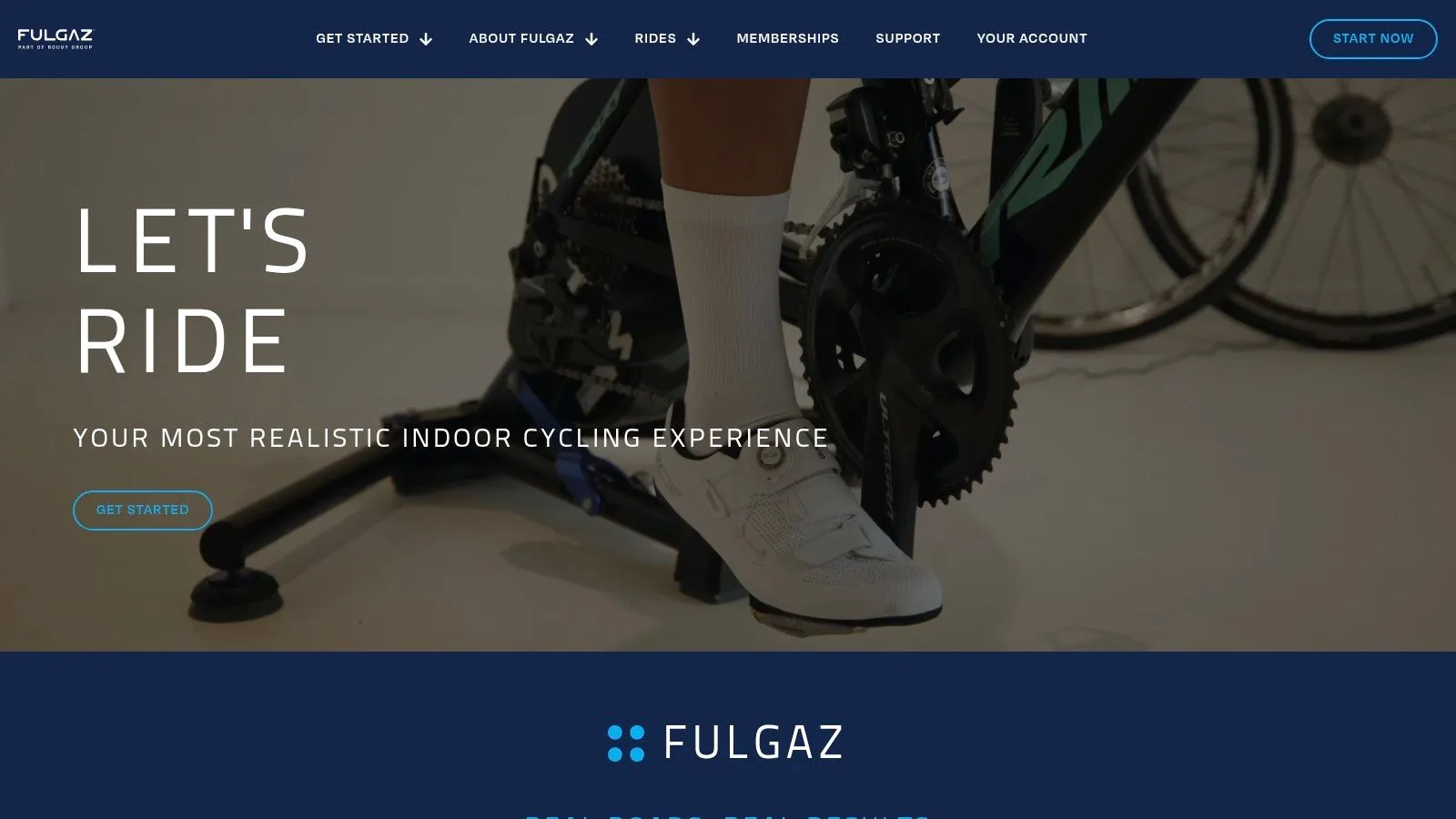
For many riders, that’s the appeal. You open the app, pick a road, and ride. You don’t get pushed into badges, social loops, or race tactics unless you go looking for them. For base miles, triathlon prep, and mentally quieter sessions, that simpler tone works well.
FulGaz is especially good when you want realism without the extra visual clutter of avatars and pack dynamics. It helps some athletes settle into steady-state work better than busier platforms do.
Where FulGaz works best
FulGaz shines when the ride itself needs to carry the session.
- Best for scenic endurance work: Long aerobic rides feel less repetitive when the road footage is strong.
- Best for event-specific prep: Curated collections are useful when you want terrain that resembles your target event.
- Less effective for racers: If your motivation comes from live competition, FulGaz won’t scratch that itch the way virtual racing platforms do.
The app also tends to suit riders who don’t want to think too much about software. Library navigation is straightforward, and that matters more than people admit. When training is already hard, clunky setup is enough to skip a session.
A lot of athletes who use FulGaz still create workouts elsewhere, especially if a coach sends free-form notes. If that sounds familiar, a dedicated workout schedule app guide can help simplify how sessions move from plan to trainer or head unit.
Train with FulGaz.
4. MyWhoosh
You finish a hard training block, open your app store, and realize you are paying for another monthly platform you only use three or four times a week. That is the problem MyWhoosh solves first.
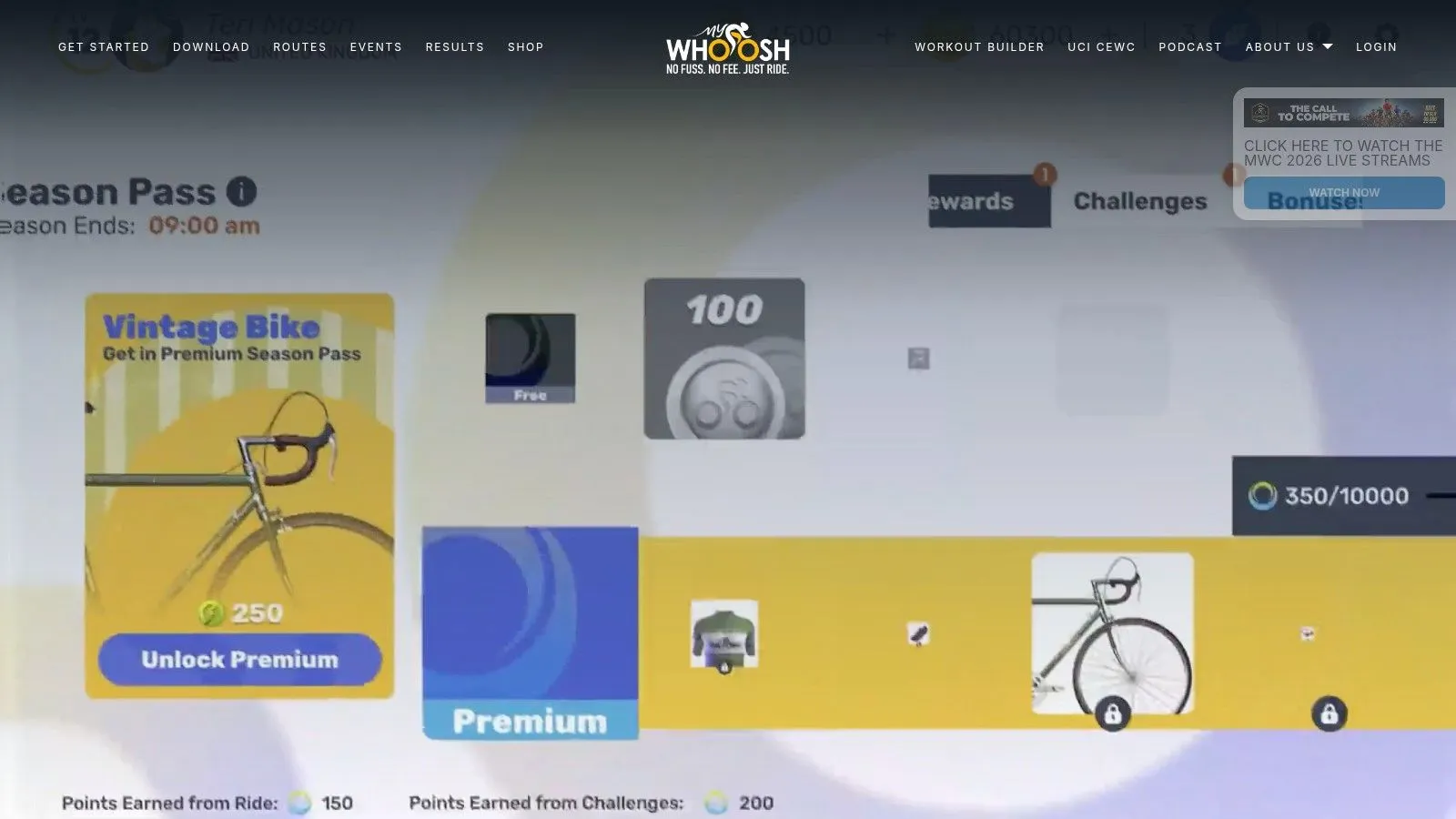
MyWhoosh matters because it removes subscription cost without reducing the app to a stripped-down trial experience. You still get a full virtual world, structured workouts, training plans, and race events. It also has real credibility on the racing side through its UCI esports role and visible investment in competitive cycling, so it is not only a budget option for beginners.
That said, free does not mean polished in every area.
In practice, MyWhoosh makes the most sense for riders who care more about access and training utility than about the last 10 percent of user experience. The graphics are solid, the workout tools are useful, and the racing scene is serious enough to matter. But setup, menu flow, and general refinement can feel less settled than the best paid platforms. For some riders, that trade-off is easy. For others, it becomes the reason they stop using it.
Who It’s For
MyWhoosh suits riders who want broad functionality and can tolerate a bit more friction in the workflow.
- Best for budget-conscious racers: It gives you structured training and competitive events without another monthly fee.
- Best for riders testing indoor training: If you are still figuring out whether smart trainer riding will stick, MyWhoosh lowers the cost of experimenting.
- Best for athletes bringing their own workouts: If your coach builds sessions elsewhere, or you create them in another tool, MyWhoosh is one of the free platforms worth checking for workout support before paying for a subscription.
- Less ideal for riders who value refinement first: If clean menus, fast pairing, and predictable app behavior matter more than price, a paid platform may still feel better day to day.
For coached athletes, this is the key decision point. The question is not whether MyWhoosh offers enough on paper. It usually does. The question is whether it fits your training routine without adding extra hassle when you are importing workouts, pairing devices, or jumping into a session with limited time.
Free is a real advantage. It does not automatically make the training experience easier.
Visit MyWhoosh to check current events and device support.
5. Kinomap
Kinomap works best when your household, gym, or training setup doesn’t fit the neat mold of “one cyclist, one smart trainer, one app.”
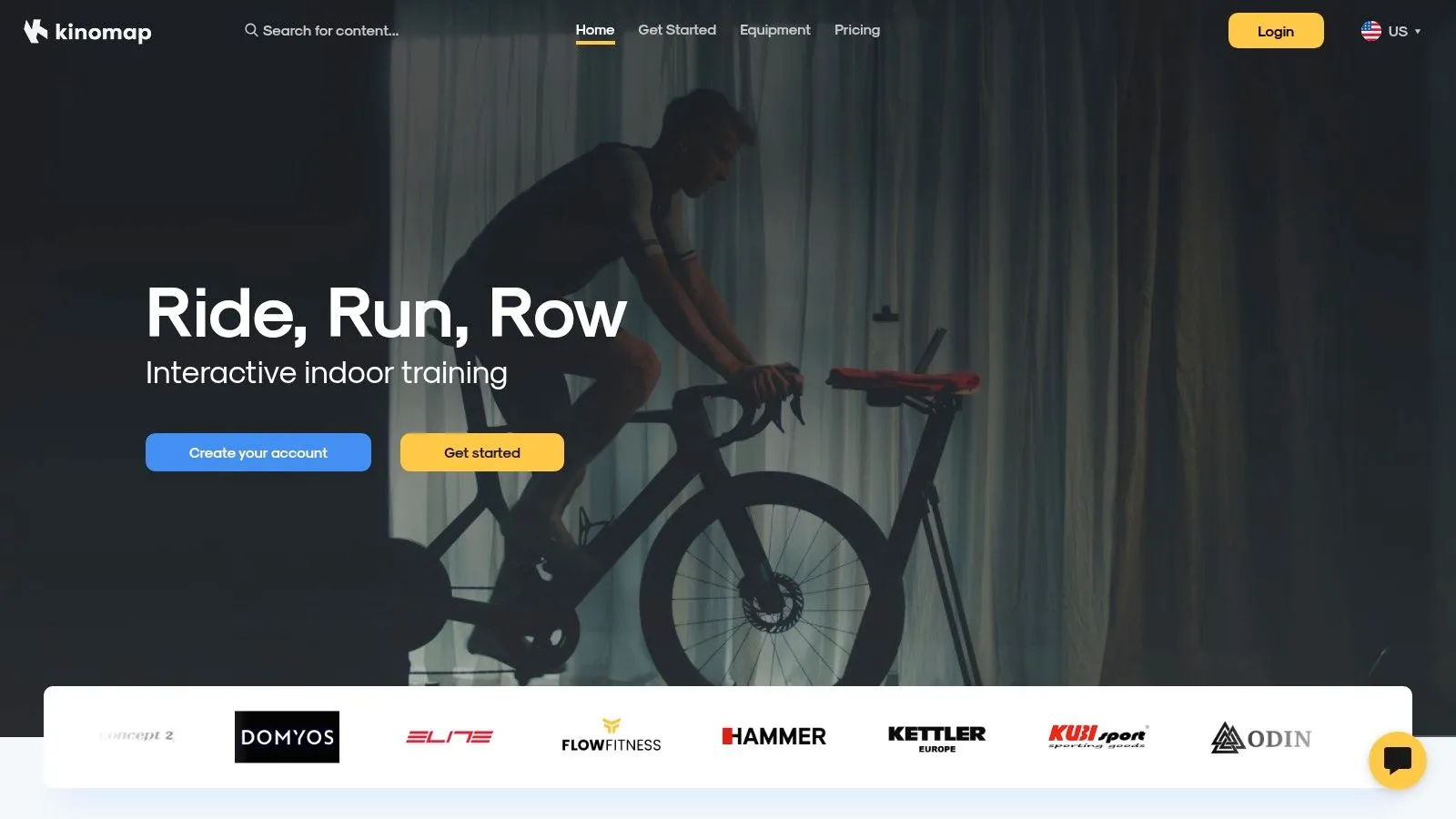
Its strength is breadth. Kinomap pulls from a huge library of geolocated user-uploaded videos and supports more than cycling. That makes it useful for multisport homes, athletes cross-training indoors, and anyone who values route variety over a polished, tightly curated ecosystem.
The upside of crowdsourced content is freshness. There’s always something different to ride. The downside is consistency. Video quality, pacing, and GPS alignment can vary because the library is built from many contributors rather than one tightly controlled production process.
Where Kinomap wins
Kinomap makes sense for riders who prioritize variety and compatibility over competitive structure.
- Best for route hunters: If you get bored fast, the constant turnover in available videos helps.
- Best for multisport setups: Cycling, running, and rowing support make it more flexible than cycling-only platforms.
- Less ideal for esports-minded riders: Racing depth and event structure aren’t the main attraction.
This is one of those apps where expectations matter. If you want every route to feel premium and uniform, you may get frustrated. If you want a giant menu of places to ride and you’re comfortable with some unevenness, Kinomap is easy to appreciate.
Use Kinomap’s official platform to browse devices and subscription options.
6. Wahoo SYSTM (Wahoo App)
A rider with limited training time usually needs two things from an app. Clear sessions and less decision fatigue. That is where Wahoo SYSTM earns its place.
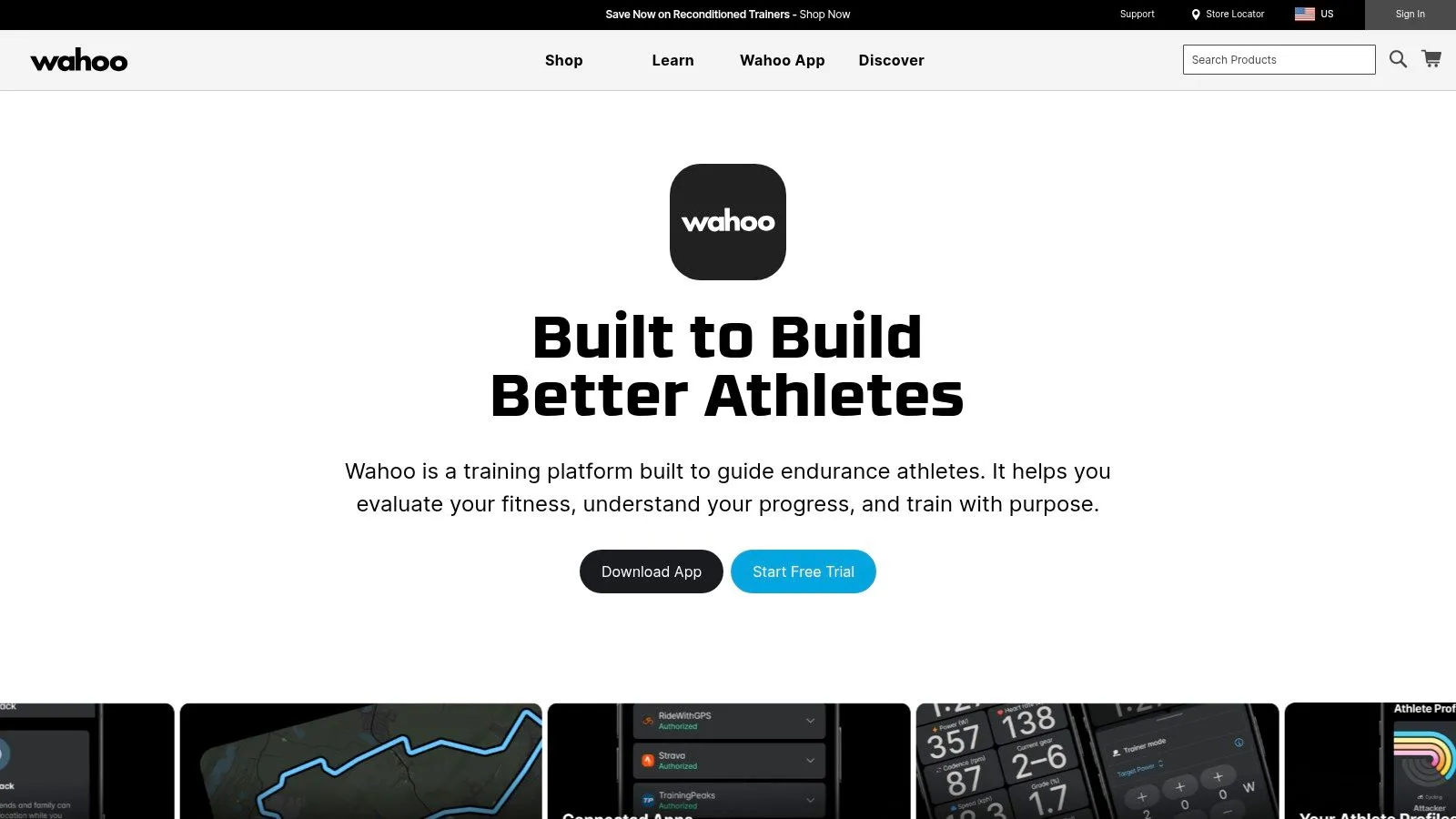
SYSTM is built around training execution, not virtual exploration. The appeal is straightforward. You open the app, follow the session, and move on with your day. For time-crunched athletes, especially triathletes and age-group racers, that matters more than animated roads or crowded event calendars.
Its biggest strength is range. The bike workouts sit alongside strength work, yoga, mental training, and other supporting sessions that endurance athletes often mean to do but keep postponing. In practice, that makes SYSTM more useful as a weekly training hub than as a pure indoor riding app.
Price helps its case too. Wahoo SYSTM sits below Zwift on monthly cost, and the value argument is stronger if you use the off-bike content rather than paying for cycling alone.
Who It’s For
Wahoo SYSTM fits athletes who want structure first and stimulation second.
- Best for triathletes and busy riders: The non-cycling sessions make it easier to keep the whole training week in one place.
- Best for athletes who benefit from more nuanced testing: 4DP can be more informative than FTP alone if your strengths are uneven across sprint, threshold, and sustained efforts.
- Best for riders using imported workouts from other sources: If your coach builds sessions elsewhere, or you use tools like TrainingPeaks or TextFit to create structured workouts, SYSTM is easier to justify when it becomes the player for those sessions instead of the planner.
- Poor fit for riders who train for social motivation: There is no real substitute here for Zwift’s group rides, racing, or open-world habit loop.
That last point is the trade-off. SYSTM can feel a little dry if indoor riding is how you stay entertained through winter. I recommend it to athletes who already know why they are training and do not need a virtual crowd to get through an interval set.
The 4DP side is also worth choosing carefully. Some riders get better workout targets from it because it captures more than one type of effort. Others will find it more complicated than they need. If you want a simple progression anchored to FTP, TrainerRoad often feels cleaner. If you want a broader training library that includes off-bike work, SYSTM has the better case.
Explore Wahoo SYSTM in the Wahoo App.
7. Tacx Training (Garmin)
Tacx Training is one of the easiest recommendations for riders already living inside the Garmin ecosystem.
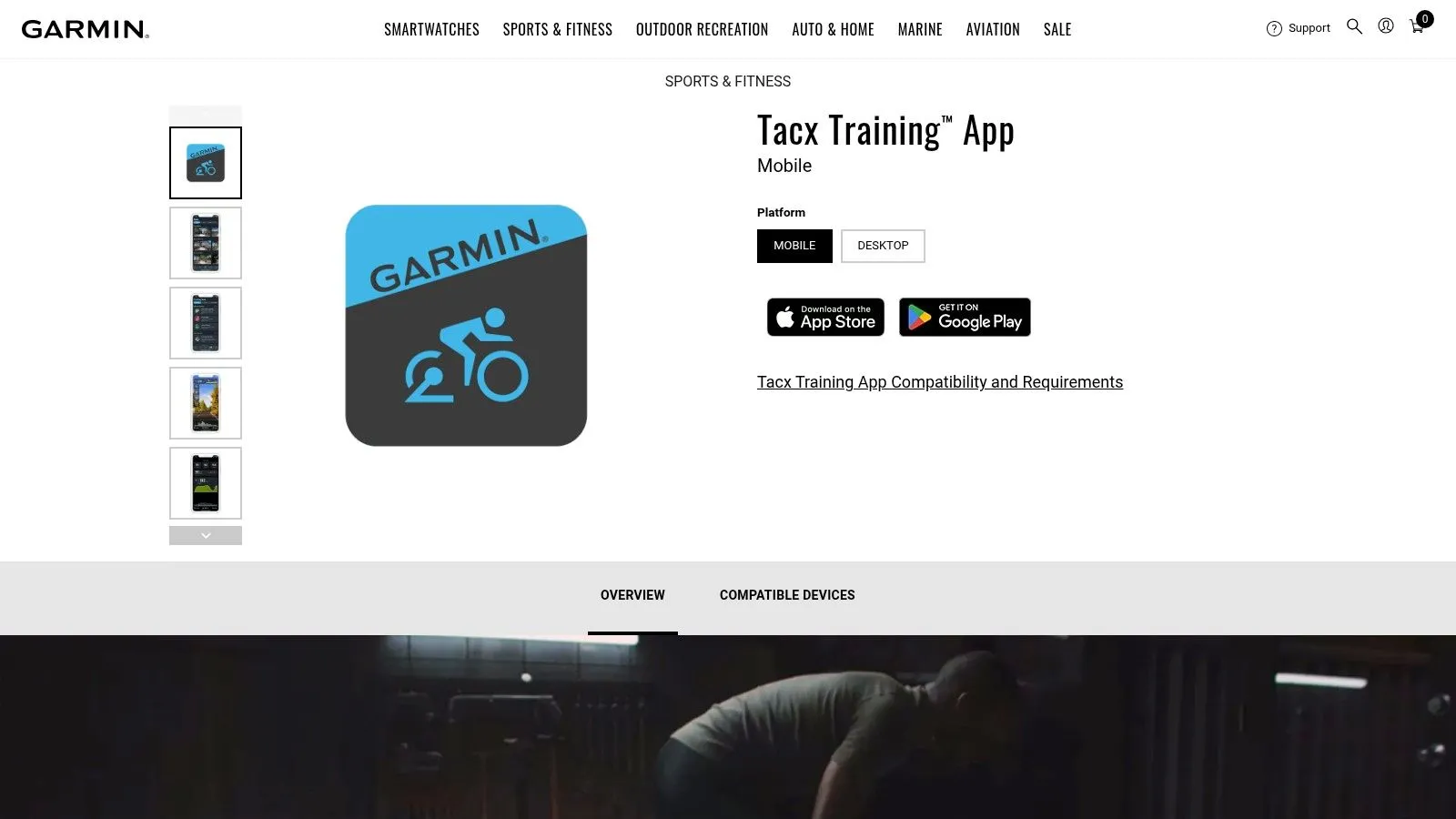
That doesn’t mean it only works for Garmin users. It means Garmin users get the least friction. Scheduled workouts, familiar data flow, and trainer integration all matter more in real life than a flashy app comparison would suggest. When the devices, the calendar, and the workout library talk to each other cleanly, you miss fewer sessions.
Tacx Training leans toward real-life video routes and structured sessions rather than social density. It’s a stable pick for riders who want route simulation without entering a game world.
Why Garmin users stick with it
Tacx Training is mostly about convenience and continuity.
- Best for Garmin and Tacx owners: The ecosystem fit is the main reason to choose it.
- Best for simple execution: Scheduled workouts can move into the training session with less messing around.
- Less compelling for community riding: Racing and social layers are lighter than in apps built around events.
The best app for many athletes isn’t the most exciting one. It’s the one that removes the fewest steps between plan and workout.
If your training already lives in Garmin Connect and your indoor setup uses Tacx hardware, Tacx Training from Garmin is a logical option.
8. Xert
Xert is for riders who don’t merely tolerate training theory. They enjoy it.
It approaches indoor training differently from the usual weekly-plan model. Instead of pushing you through a fixed script, Xert keeps adjusting your targets around freshness, effort history, and ongoing fitness interpretation. That makes it one of the more interesting Zwift alternatives for self-coached athletes who hate static plans.
The upside is adaptability. If life disrupted your week, Xert is often better at absorbing that than a rigid calendar. The downside is cognitive load. You need to buy into the system and understand at least some of what it’s telling you, or the platform can feel more opaque than helpful.
Who It’s For
Xert suits a narrower audience than TrainerRoad, but for that audience it can be excellent.
- Best for self-coached riders: Especially those who enjoy analyzing performance trends.
- Best for adaptive training fans: The dynamic approach is useful when your schedule or recovery is unpredictable.
- Tougher for beginners: The learning curve is real, and the interface is more technical than casual users may want.
The app is less about visual motivation and more about staying on the right side of productive training. If you need a cheering crowd, choose something else. If you want deep guidance without a fixed plan bossing you around, Xert deserves a serious look.
9. BigRingVR
BigRingVR is one of the quieter names in this space, which is part of why some riders overlook it.
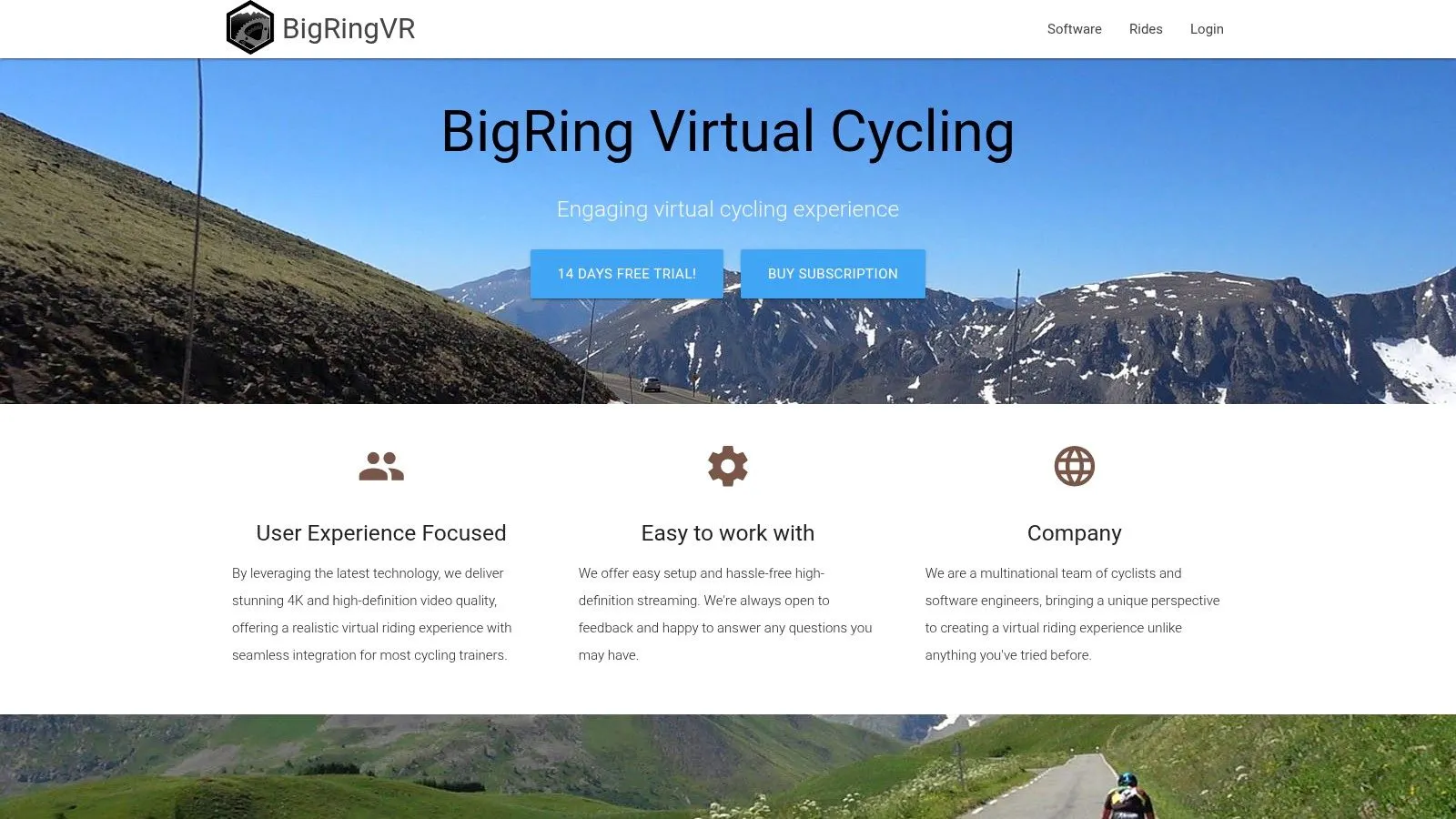
It doesn’t try to be everything. It gives you real-world video rides, solid trainer support, leaderboards, and a curated library without wrapping the whole experience in a giant social platform. For riders who want a straightforward desktop-based app and don’t need big event culture, that restraint is a plus.
This is also one of the better family-value choices among paid options. Not every rider needs a huge route catalog if the routes they do get are well chosen and easy to use.
Where BigRingVR makes sense
BigRingVR is strongest when simplicity is the feature.
- Best for focused solo riders: It keeps you close to the ride, not the platform.
- Best for households sharing access: Family-friendly subscription structure helps.
- Weaker for race-oriented riders: The ecosystem is smaller, so don’t expect the depth of larger communities.
If your ideal indoor app is calm, competent, and not trying to become a metaverse, BigRingVR is worth testing.
10. GoldenCheetah
GoldenCheetah is the outlier on this list. It’s not polished in the way commercial apps are, and that’s fine.
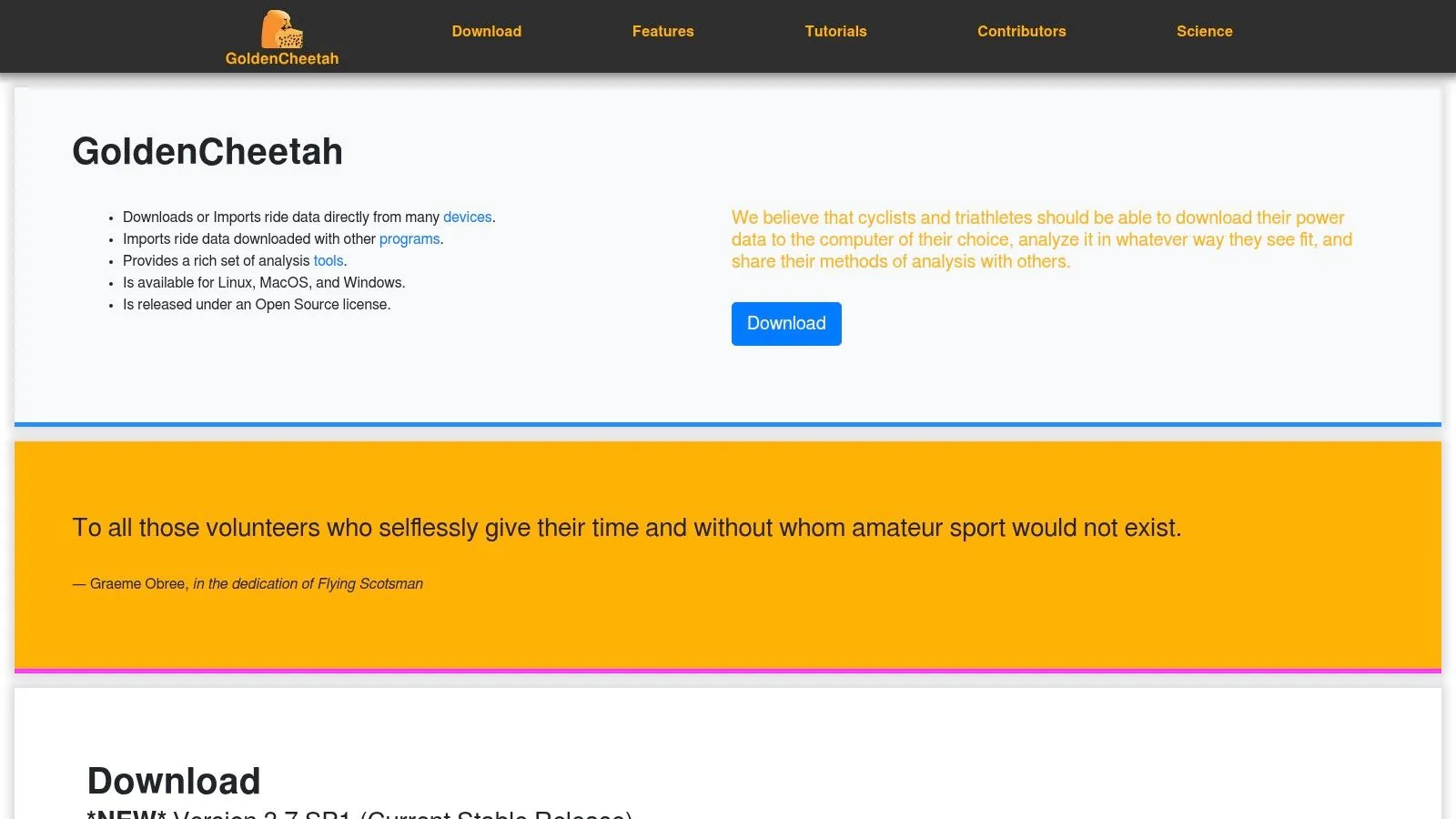
If you want deep analytics, trainer control, and custom workouts without paying a subscription, GoldenCheetah remains one of the most compelling Zwift alternatives. It’s free and open source, which immediately changes the value equation for technically comfortable riders.
This isn’t the app you recommend to someone who bought their first trainer yesterday. It is the app you recommend to the rider who already uses training metrics seriously, likes customizing dashboards, and doesn’t mind doing some setup work to get exactly the workflow they want.
Who It’s For
GoldenCheetah rewards patience and punishes people who want instant slickness.
- Best for data-heavy users: CP modeling, dashboards, and deep analysis are the draw.
- Best for zero-subscription setups: You can control workouts and trainers without another monthly fee.
- Wrong fit for social riders: There’s no multiplayer world, no live pack dynamic, and no integrated esports layer.
The biggest reason to use GoldenCheetah is control. The biggest reason not to is time. If you enjoy tinkering, GoldenCheetah can become a powerful part of your setup. If you don’t, it can become another unfinished project.
Top 10 Zwift Alternatives: Feature & Pricing Comparison
| Product | Core features & workflow | ★ UX / Quality | 💰 Price / Value | 👥 Target audience | ✨ Unique strengths / 🏆 |
|---|---|---|---|---|---|
| ROUVY | 1,300+ real‑video routes, gradient sim, structured workouts, group events | ★★★★, realistic video feel | 💰 Subscription, seasonal pause options | 👥 Riders who prefer real routes over gamified worlds | ✨ Iconic race routes & multi‑rider events 🏆 |
| TrainerRoad | AI FTP detection, plan builder, large workout library, head unit sync | ★★★★, data‑first, focused UX | 💰 Mid–high subscription | 👥 Performance‑oriented athletes & coaches | ✨ Adaptive Training, evidence‑based plans 🏆 |
| FulGaz | 4K/HD real‑road videos, curated collections, simple library | ★★★★, very high video fidelity | 💰 Subscription (annual/family options) | 👥 Riders valuing scenic, high‑fidelity rides | ✨ 4K rides & event‑focused collections 🏆 |
| MyWhoosh | Free virtual worlds, workouts, races, esports program | ★★★, large worlds; some UX quirks | 💰 Free‑to‑play (high value) | 👥 Budget‑conscious racers & esports entrants | ✨ Zero‑cost entry to virtual racing 🏆 |
| Kinomap | Crowd‑sourced geolocated videos, multi‑sport content, big library | ★★★, vast catalog, variable quality | 💰 Subscription; occasional offers | 👥 Multisport users & variety seekers | ✨ Massive, constantly refreshed routes 🏆 |
| Wahoo SYSTM (Wahoo App) | 4DP profiling, daily workouts, cross‑training, video sessions | ★★★★, integrated training ecosystem | 💰 Clear tiers + 14‑day trial | 👥 Athletes wanting bike + off‑bike plans | ✨ 4DP + strength/yoga/mental training 🏆 |
| Tacx Training (Garmin) | Real video routes, slope sim, Garmin Connect sync, desktop/mobile | ★★★★, smooth Garmin/Tacx integration | 💰 Regionally varied pricing/activation | 👥 Garmin/Tacx ecosystem users | ✨ Tight Garmin Connect scheduling & sync 🏆 |
| Xert | Dynamic fitness signature, real‑time adaptive workouts, deep analytics | ★★★, powerful but steeper learning curve | 💰 Subscription; billing details disclosed at signup | 👥 Advanced self‑coached athletes & analysts | ✨ Real‑time adaptive targets & breakthrough analytics 🏆 |
| BigRingVR | High‑quality real‑route video, ANT+/Bluetooth trainer support, leaderboards | ★★★★, lean, reliable desktop app | 💰 Very competitive pricing, family plan, 14‑day trial | 👥 Cost‑conscious riders wanting curated routes | ✨ Family subscription + curated challenges 🏆 |
| GoldenCheetah | Free open‑source analysis, ERG/slope control, workout builder | ★★★, extremely capable but technical | 💰 Free (open‑source) | 👥 Tech‑savvy cyclists/coaches needing pro analytics | ✨ Pro‑level analysis & fully free 🏆 |
Finding the Right Indoor Road for You
The best Zwift alternative is the one you’ll keep using in February, when motivation is lower and the novelty is gone.
If you’re training for results first, TrainerRoad and Xert are the clearest performance tools on this list. TrainerRoad is easier to recommend broadly because its workflow is cleaner and more approachable. Xert is more niche, but strong for self-coached athletes who want a dynamic system instead of a fixed calendar. Wahoo SYSTM also belongs in this conversation if you want bike training tied to strength and other off-bike work.
If realism matters most, ROUVY and FulGaz are the two names I’d put in front of almost any rider. ROUVY is the more rounded all-around option if you still want events and structured training depth. FulGaz is great when you want visual immersion without much gamified noise. Tacx Training also fits this lane well, especially if Garmin and Tacx already anchor your setup.
If cost is the deciding factor, MyWhoosh changes the usual trade-off. It gives you a full virtual riding environment without a subscription, and that alone makes it one of the most disruptive Zwift alternatives available. The broader virtual cycling app market is projected to reach USD 1.59 billion by 2035, growing at a 12.1% CAGR from 2026 to 2035, with competitors including ROUVY, MyWhoosh, and TrainerRoad helping drive adoption beyond Zwift, according to Wise Guy Reports’ virtual cycling app market outlook. You can feel that shift already. Riders now expect options across free, mid-tier, and premium models.
For mixed households and route variety, Kinomap makes more sense than people sometimes expect. For technically inclined riders who care more about analysis than polish, GoldenCheetah is still remarkably capable. For riders who want a simpler, curated real-video platform with family-friendly value, BigRingVR deserves more attention than it gets.
One more point matters if you train seriously. The app itself is only part of the workflow. The bigger pain point is often getting structured workouts into the platform cleanly, especially when sessions come from a coach, a notes app, a spreadsheet, or a message thread. Some platforms handle imported workouts better than others. Some make custom creation tedious. That’s why many experienced athletes separate workout creation from workout execution.
Use the app that gives you the ride experience you want. Then use a faster workflow for creating structured sessions when the native builder is clunky. That combination is often better than forcing one platform to do every job.
Try the free trials where they exist. Test device pairing before you commit. Run one easy ride, one threshold session, and one longer endurance ride before deciding. That will tell you more than any feature list.
If your biggest frustration isn’t choosing among Zwift alternatives but turning coach notes into clean structured workouts, try TextFit. Type the session in plain language, in any language (“3 x 12 min sweet spot, 4 min easy”), review the structured version, and send it to your Garmin, Wahoo, or Apple Watch. It’s free to start and needs no sign-up.